When many people think of bats, they picture spooky Halloween decorations, disease carriers, or mysterious creatures of the night. In reality, bats are some of the most beneficial and misunderstood mammals in our ecosystem. They play a critical role in keeping insect populations in balance, pollinating plants, dispersing seeds, and recycling nutrients through their guano, which enriches forest soils.
North Carolina is home to 17 species of bats, including four federally endangered species: the Virginia Big-eared Bat, Indiana Bat, Gray Bat, and Northern Long-eared Bat. Unfortunately, bat populations have experienced significant declines due to habitat loss, pesticide use, disturbance of hibernation sites, and the impacts of white-nose syndrome.

To better understand and protect these remarkable animals, the Friends of the WNC Nature Center’s Outreach Education team helped the North Carolina Wildlife Federation and the National Parks Conservation Association to conduct bat surveys in Pisgah National Forest. The project focuses on monitoring bat activity in both old-growth and second-growth forests to help fill important gaps in our understanding of how bats use these habitats.
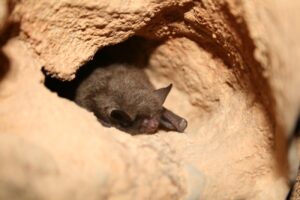
As part of the survey effort, the Friends’ Outreach Educators help deploy two ultrasonic recording units in the Craggy Mountain area. Because bats navigate and hunt using high-frequency echolocation calls that are beyond the range of human hearing, these specialized detectors use highly sensitive microphones and high sampling rates to record their calls. Researchers can then analyze the recordings to identify which bat species are present and better understand their activity patterns.
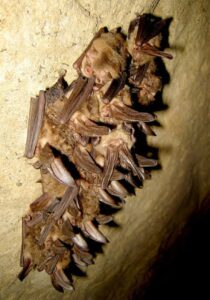
The information gathered through these surveys will provide valuable data to guide conservation decisions across Western North Carolina. By protecting bat habitat, we are not only helping these incredible nocturnal mammals, but also supporting the health of the forests. Healthy forests are essential to ensuring native wildlife populations continue to thrive.
Bats may spend their nights hidden from view, but their impact on our ecosystems is crucial. Through research, habitat conservation, and community partnerships, we can help ensure these fascinating animals continue to thrive for generations to come.