By Jill Sharp
As temperatures drop, turtles and other reptiles in our region prepare for winter through a process called brumation, often described as the reptilian version of hibernation.
Unlike mammals, reptiles are ectothermic, meaning their body temperatures are regulated by the temperature of their surroundings. When winter arrives and temperatures fall, their metabolisms slow dramatically. This allows them to conserve energy and remain dormant until warmer weather returns. Unlike mammals in true hibernation, brumating reptiles may still emerge on particularly warm, sunny days to bask in the sunshine.
Different turtles have different strategies for making it through the colder months.
Box turtles burrow beneath leaf litter and fallen logs, seeking shelter below the frost line. As their metabolisms slow, they no longer need to eat and can remain dormant for months.
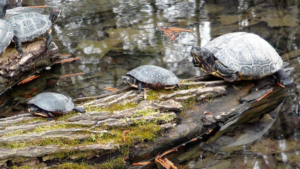
Aquatic turtles have some remarkable adaptations of their own. They burrow into the mud at the bottom of ponds and lakes, where they can remain submerged throughout the winter. While they aren’t breathing in the usual way, they can absorb oxygen from the water through their skin, cloaca and the lining of their mouths. Some species, including snapping and painted turtles, can tolerate extremely low-oxygen conditions by slowing their metabolism even further. They can even use calcium carbonate from their shells to help neutralize acid buildup in their bodies. A brumating turtle’s heart rate can drop to as little as one beat per minute!
At the WNC Nature Center, we prepare for winter by providing our box turtles with a deep layer of fallen leaves where they can safely burrow. Our pond has a natural bottom, allowing aquatic turtles to settle into the mud and brumate naturally.
Typically, our turtles burrow in mid-October and begin reappearing in late April. Don’t be surprised if they’re a little slow to get moving when they first emerge! They often spend several days, or even a few weeks, basking in the sunshine before their appetites return.
It’s just one of the many remarkable ways animals of the Southern Appalachians adapt to the changing seasons.
Jill Sharp is the Reptiles and Amphibians Keeper at the WNC Nature Center.