OPEN TODAY: 10AM-4:30PM Last Admission @ 3:30

Author: nsadmin

Leave a Legacy for the Next Generation of Nature Lovers

There’s something special about taking your children, and then your children’s children, to the Nature Center. Seeing the animals and play areas through their eyes helps you rediscover memories that had long been stored away. There’s a sense of belonging, and a beautiful knowledge that one day, this little one might just carry on the tradition and visit the Nature Center with their own children.

In a few years, the WNC Nature Center will celebrate its 50th anniversary. How do we make sure it is still here and thriving for the next 50 years? The long and short of it is that we cannot, unless we give a gift beyond our lifetimes.

The Friends of the WNC Nature Center have launched a formal Legacy Giving program to ensure future generations get to experience the plants and animals of the Southern Appalachians Mountains firsthand at the Nature Center. 

Legacy giving has already played an important role in the Friends of the WNC Nature Center’s story. When the pandemic temporarily closed the Nature Center for six months, there was a significant loss in funds usually generated by guests purchasing memberships, event tickets, and items from the Gift Shop. The survival of the Friends was greatly helped by donations provided through planned gifts that arrived that spring. 

One such gift was given by Dr. Steven Alan Williams, who passed away in late 2019 after an extended battle with cancer. Steven was simply a wonderful person who loved animals of all kinds, especially his miniature Schnauzers, pictured below. An Asheville native, he deeply appreciated the Nature Center throughout his life and believed in the Nature Center’s mission of conservation and education in support of native Appalachian species.

Steven built his career on his love for music, being an exceptional musician, teacher, and mentor throughout his life. As we reflect on our past and consider our futures, it can be disconcerting to recognize how fleeting our time on this earth is. Steven was able to realize that the symphony of his life was coming to an end, and he chose to leave a legacy gift to the Friends of the WNC Nature Center that would resonate for years to come. 

By naming the Friends of the WNC Nature Center as a beneficiary of your will or trust, life insurance policy, or retirement plan, you help prepare us for every challenge and let us plan for the future. To leave a gift in your will, simply share this sentence with your attorney or financial planner: “I bequeath $___ or ___% of my estate to The Friends of the WNC Nature Center (Tax ID #23-7412910), PO Box 19151, Asheville, NC 28815. For more information, please contact Director of Development Kate Frost at [email protected].

Celebrate Environmentally-friendly Living with a Virtual Party for the Planet

For more than 20 years, Association of Zoos and Aquariums (AZA) accredited institutions across North America have thrown a Party for the Planet to celebrate Earth Day (April 22), Endangered Species Day (May 15), and World’s Ocean Day (June 8) through various events, activities, and celebrations that encourage families to take action to improve the planet and inspire the next generation of conservationists.

The WNC Nature Center reopened to the public in October after a six-month closure due to the pandemic. Although the usual season for the Party for the Planet has passed, the WNC Nature Center will be wrapping up the year with a virtual Party for the Planet.

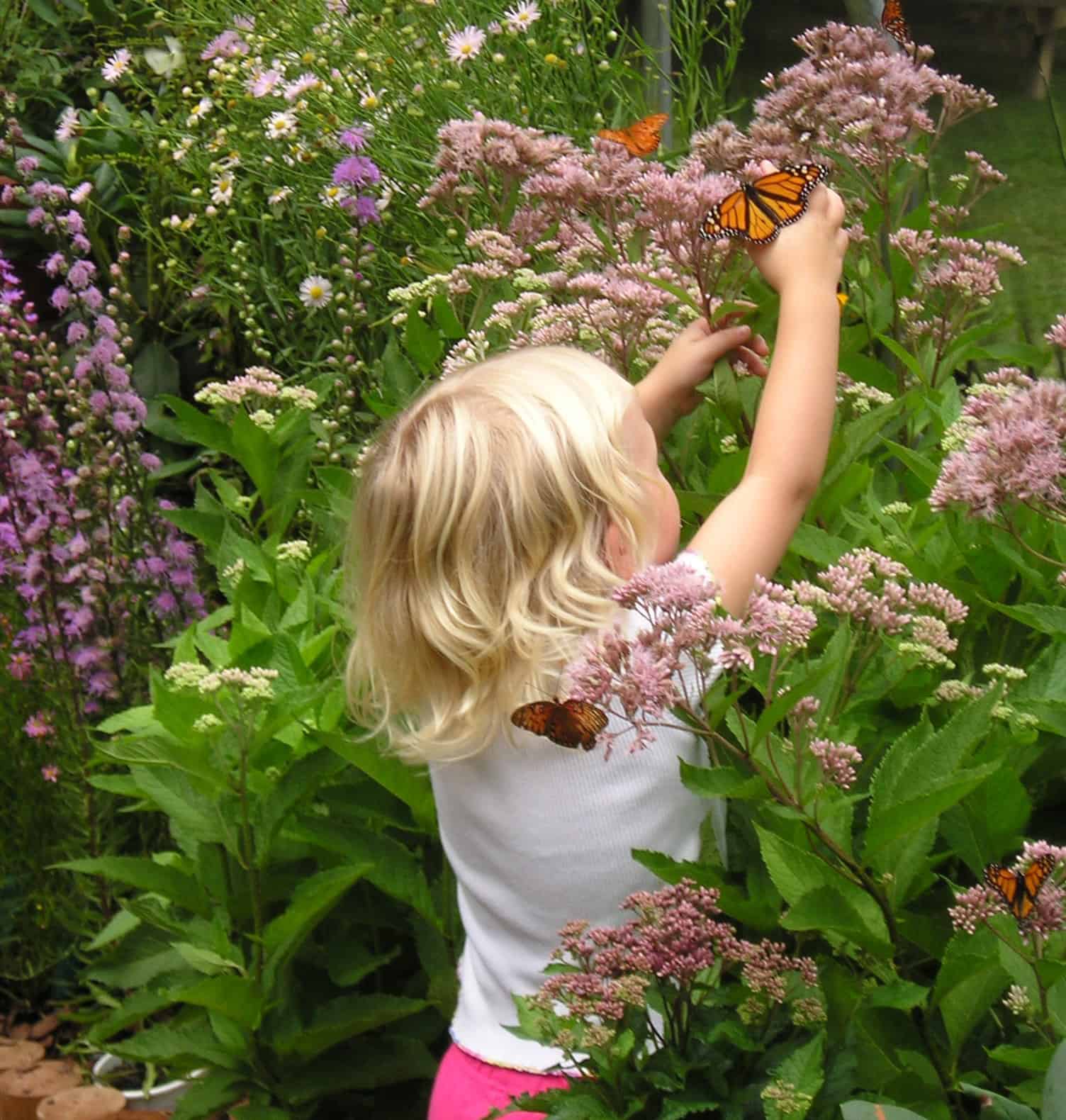
During the month of December, the WNC Nature Center is asking families to share ways they have helped improve the planet in 2020 and pledge to help it in 2021. Activities like picking up litter, planting native plants, recycling, creating a monarch butterfly garden, riding a bike, reducing plastic use, and taking shorter showers are all ways to contribute toward a cleaner, healthier planet.

To participate in the WNC Nature Center’s virtual Party for the Planet, upload a picture and a blurb on your favorite social media platform to highlight something you are already doing and something you’d like to pledge to incorporate into your life in 2021. Be sure to tag #wildwnc, #keepashevillewild, #wncnaturecenter, and #partyfortheplanet, then visit the WNC Nature Center Gift Shop to pick up a free reusable straw while supplies last.

Eli Strull, Curator of Education and Guest Experience at the WNC Nature Center, has been working with his Education Team to highlight conservation as an integral part of the Nature Center’s mission: “We are thrilled to partner with AZA and engage with our community in simple, effective conservation efforts to benefit people and wildlife. It is a joy to participate in unique education efforts during this unconventional year and we are so excited to celebrate Party for the Planet with all of our participants.”

Learn from the Best at the WNC Nature Center!

This summer at the Environmental Educators of North Carolina (EENC) conference, hundreds of formal and informal educators came together virtually to learn everything education! At the end of the conference, it was announced that not one, but two educators from the WNC Nature Center won prestigious awards! Congratulations to Alayna Schmidt and Tori Duval, pictured above left to right.

Alayna Schmidt, Education Specialist for the WNC Nature Center (City of Asheville), was awarded the Outstanding Practitioner award. This award recognizes a member of the Environmental Educators of North Carolina who works regularly as an environmental educator, lending their skills to the growing body of environmental education as a profession. The individual will have made significant contributions to the Environmental Educators of North Carolina through statewide participation, leadership in their region, and being an advocate for high quality education through how they teach, live, and do. This award goes to a passionate leader in the Environmental Education field who has focused on building partnerships with various organizations.

In addition to being a guiding force to inspire Young Naturalist Teen Volunteers, Alayna passionately works for equity and inclusion in the outdoors through programming, education and personal and professional growth. Alayna participates in Everybody’s Environment, a collective of environmental organizations in Western North Carolina working to support racially equitable leadership in our field. In addition, she organized the Nature Center’s inaugural Sensory Inclusion Celebration event. Alayna also responded quickly to community needs during the COVID-19 pandemic and moved teen programming into distance volunteering to keep the community safe and engaged with the Nature Center. She has co-led a community call for EENC this summer, and has even recently been the recipient of a $500 grant through the Children and Nature’s Network’s Youth Outdoor Equity Leadership Fund. Alayna supports the mission of EENC and sets a standard of excellence for environmental educators in North Carolina. 

Tori Duval, Outreach Educator for the Friends of the WNC Nature Center (501(c)3), was awarded the Outstanding Newcomer award. This award recognizes an Environmental Educators of North Carolina member of five years or less who has made significant contributions to EENC during their short time with the organization.

Tori is a certified environmental educator and interpretive guide and has been the outreach educator at the WNC Nature Center since 2016. In that time, she has built an outreach education program that now reaches 10,000 individuals annually. She is a one-woman show, responsible for program design, marketing, scheduling, program delivery, and evaluation. 

Tori has made her mark on the Environmental Education world in such a short period of time! She began working at the Nature Center in 2016, joined EENC in 2019, and has already established an education program with a 10,000 participant per year reach! When the Nature Center closed temporarily to the public in March due to COVID-19, Tori worked to offer interactive virtual education opportunities. She reached over 1,000 students in April and May, providing distance learning programs for grades K-10. She is now partnering with the City Education staff to increase the reach of the distance learning program in the fall. All of her accomplishments support the mission of EENC to build connections, provide professional development, and promote excellence for North Carolina’s community of environmental educators. Tori makes an effort to be involved in the Environmental Education community; she has presented at professional conferences, served on planning committees, and works to partner with fellow facilities to further expand the reach of the messages that she teaches. Most importantly, she inspires the public to fall in love with nature and become more environmentally literate citizens. 

As you can see, the Nature Center has a lot to celebrate, including our award-winning team of passionate educators! The Education Team at the Nature Center is offering live virtual education programs for K-12 classes. These interactive lessons are 30 to 45 minutes long, correlate with state learning standards, and always involve meeting an animal ambassador! Check out dev.wildwnc.org/schools-and-groups for more information!  

Celebrate Leafa and Phoenix on International Red Panda Day

September 19 marks International Red Panda Day, and the WNC Nature Center has a lot to celebrate!  It has officially been a year and a half since the red pandas, Leafa and Phoenix, were introduced to Asheville as the newest residents of the Nature Center home! 

According to Nature Center Animal Curator Erin Oldread, Leafa and Phoenix have become quite the super stars! “Our guests love to see and meet the red pandas,” she said. “We often hear how their cute, fluffy faces look like stuffed animals.”  When the keepers are asked which animals are their favorite to work with, the red pandas is a common answer.  What makes them such interesting animals? “They are full of personality!” says Erin. “Our red pandas are intelligent but lazy. Keepers have to build a strong relationship based on trust to work with them on husbandry behaviors.”  

Husbandry behaviors are an important part of animal care that enhance the animals’ daily lives by creating opportunities for the animals to interact with their environment as they would in the wild. These behaviors also teach the animal to participate in their daily and veterinary care.    

Because of the training involved with husbandry behaviors, Leafa and Phoenix have been adjusting well to their Asheville home. As transplants from Chicago, they have thoroughly appreciated their air conditioned indoor space, locally grown bamboo, and fresh variety of fruits.  Chesley, one of the red pandas’ main keepers, loves caring for them: “Our Red Pandas both have amazing personalities, and it is a privilege to work with them. They are most active when they forage for fruit and vegetables that we scatter around their habitat. I really enjoy watching them climb, especially Phoenix!”

The prehistoric cousin of the red panda, Bristol’s panda, once called the Appalachian region home more than five million years ago, which is why its present day ancestors reside at the WNC Nature Center. The red panda habitat is the first of the Nature Center’s Prehistoric Appalachia exhibits. 

Through the Association of Zoos and Aquariums, WNC Nature Center had the opportunity to bring the endangered red panda to Western North Carolina as a part of its Species Survival Program, which helps to secure this species’ future. In the past, Leafa and Phoenix have contributed greatly to their species with four cubs. You can celebrate International Red Panda Day by symbolically adopting Leafa and Phoenix at dev.wildwnc.org/adopt.

Rotary Club of Asheville and Asheville Rotaract Volunteer Work Group

Rotary Club of Asheville and Asheville Rotaract Refurbish Their Sponsored Nature Play Space

Walking along the one and a half miles of pathways within the WNC Nature Center, you’ll encounter playful otters, howling gray and red wolves, and napping red pandas. You’ll also find eight Nature Play areas, which are especially popular with our younger guests.  

Numerous studies show that frequent unstructured play in nature has a number of health benefits for children, including supporting their physical, cognitive, creative, social and emotional development. It also helps instill an appreciation for and kinship with the outdoors that can lead to conservation behavior as children grow. The Nature Center models nature-based play spaces throughout the grounds with nature “play pockets” along the pathways. Each nature play pocket is designed to encourage interaction with natural materials and entice different types of play behavior. 

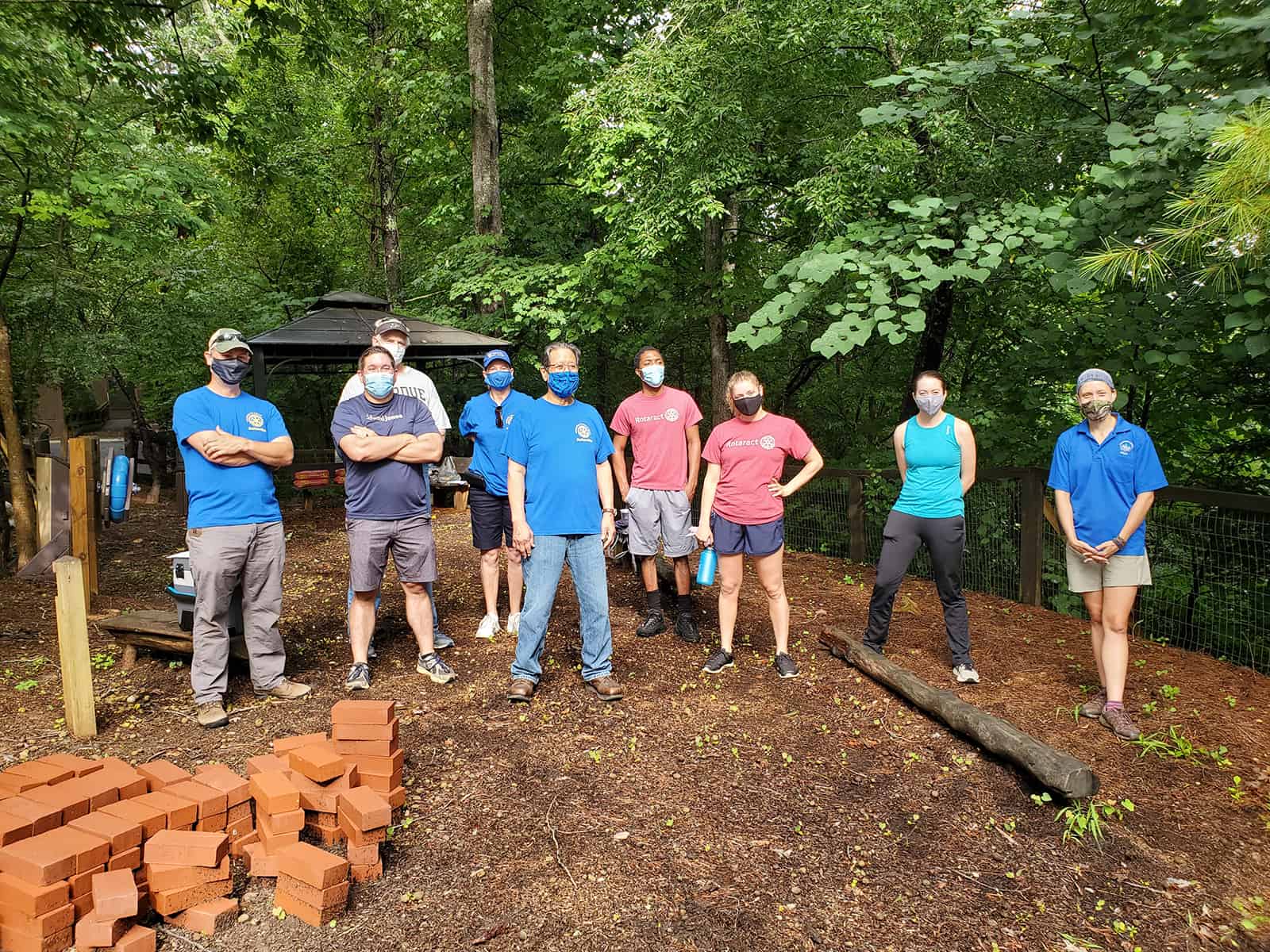
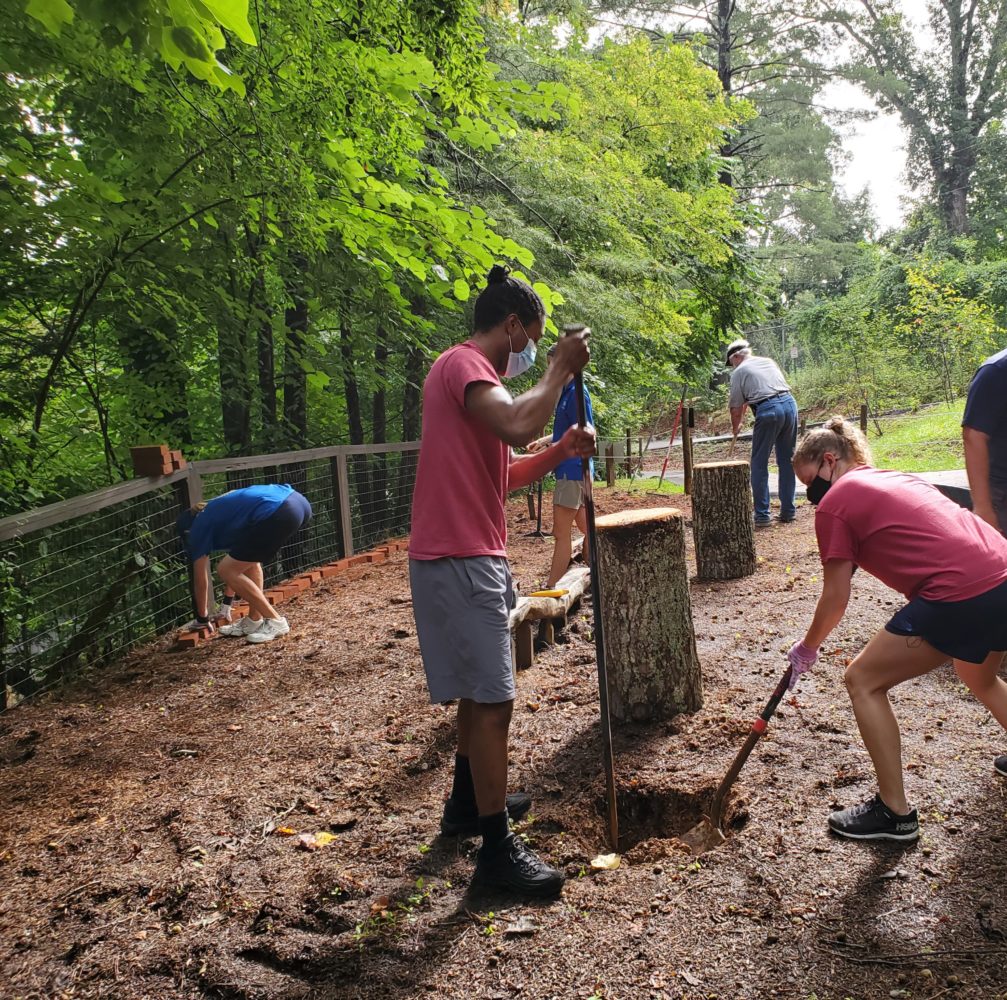
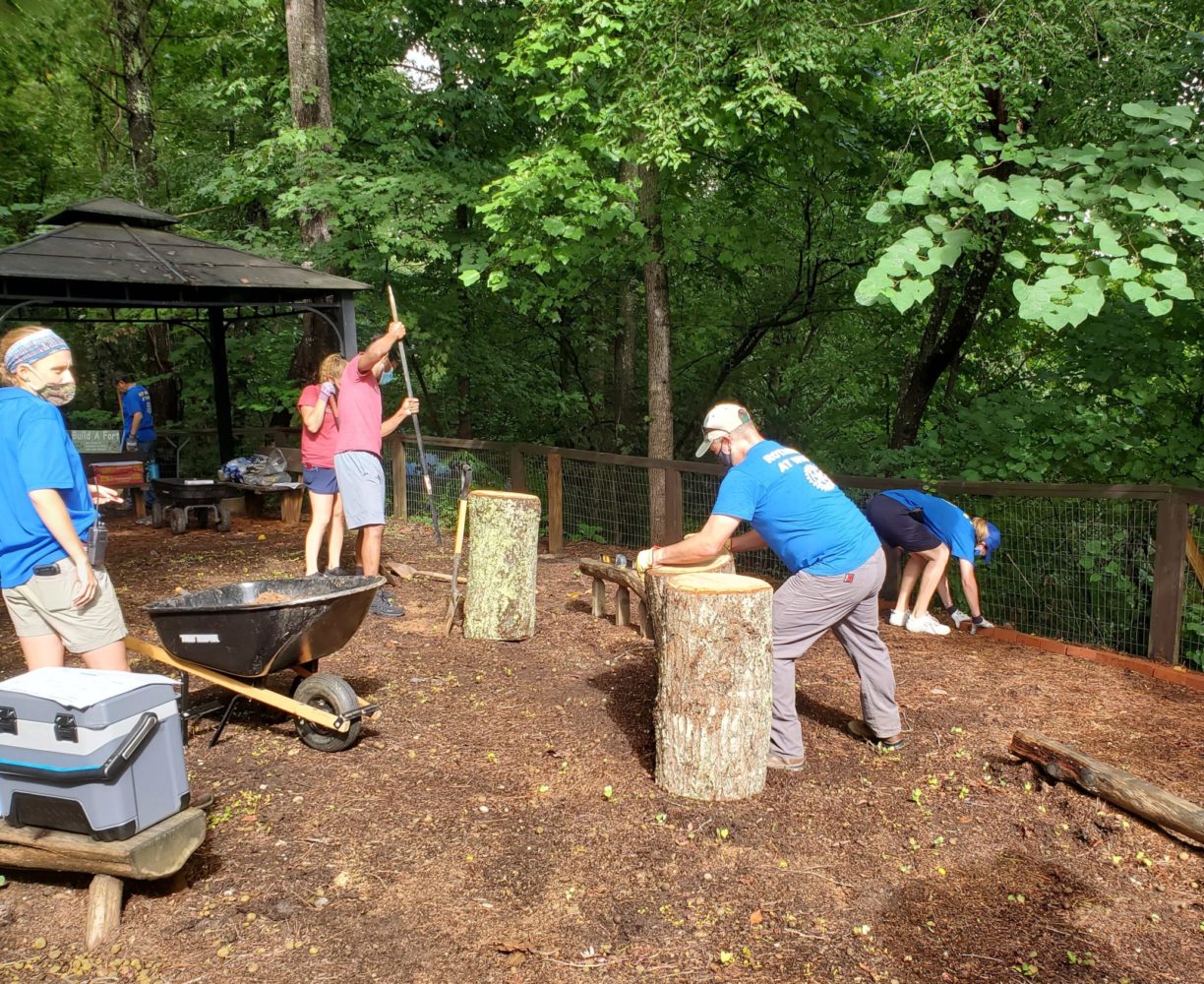
While still temporarily closed to the public due to North Carolina’s Stay Safe order, the WNC Nature Center welcomed the Rotary Club of Asheville and Rotaract Asheville in late July for a volunteer work day to refurbish the well-loved and well-used Nature Play space above the Turtle Amphitheater and across from the Animal Enrichment Garden. 

In 2010, the Rotary Club of Asheville gave a significant gift to match a grant from the Association of Zoos and Aquariums for this Nature Play space within the WNC Nature Center. After almost a decade of use, many of the natural items needed to be refurbished or replaced, and the Rotarians were excited to fund, develop, and help reconstruct their sponsored space.

This Nature Play space encourages play through music and movement. Fort building posts provide opportunities for dynamic play and practicing STEM skills as children use found tree limbs to construct forts. Natural log jump stumps and balance beams also help with motor skill development and learning how to self-regulate risks. A wooden amadinda, tongue drum, and rain wheel present musical elements for expressing creativity. The space also has a brand new sensory path for exploring the different textures, sounds, and even aromas produced when walking along the path.

Rotarian Pat Snyder is a current member of the Friends of the WNC Nature Center who helped lead the volunteer work group. “We were excited to team up with the Friends of WNC Nature Center to help restore this well-used portion of the park,” Snyder says. “It’s one of the many ways we support Rotary International’s goals by supporting education here in our local area. And this project is a great way for us to volunteer together with others in our community to make a difference during these unprecedented times.” 

Alayna Schmidt, Education Specialist at the WNC Nature Center, worked closely with the groups to plan the work day: “We can’t wait for our guests to experience the updates to this popular Nature Play space! In addition to replacing existing elements, Rotary Club and Rotaract volunteers added brand new structures, including an additional fort building post and a sensory path for more dynamic play. Best of all, most of these elements were created with materials anyone can find at a local home improvement store, so hopefully guests will leave inspired to create their own nature play spaces at home or elsewhere in their communities.”

Volunteers work on Nature Play space.

When the Nature Center reopens, take the opportunity to practice your poise on natural balance beams, get in tune with nature with wooden drums and an amadinda, slide like an otter, paint with water, build a chute, construct a fort, and more. Nature Play areas are designated on the Nature Center pathway and in trail maps by a green box with a white “play” icon inside.

The Rotary Club of Asheville is a group of active, engaged citizens interested in making friends, building relationships, and giving back to their community. They annually fund and provide volunteer support for over 14 local and international projects with a combined total budget of nearly $100,000! To learn more, get involved, or get the invite link for their weekly on-line meeting on Thursdays from 12:30-1:30, visit rotaryasheville.org.

The Asheville Rotaract is a group of young professionals between the ages of 21 and 35 who are enthusiastic about serving the local community. The club focuses on regular volunteer service, professional development, and building connections with Rotarians and community leaders. With monthly meet-ups held both in-person and virtually, they foster civil engagement and meaningful community. To learn more and get involved, visit their Facebook or Instagram by searching “Asheville Rotaract.”

Appalachian Station now boasts bioactive terrariums!

In the world of animal care, there’s one thing you can always count on: there’s always more to learn. The science of caring for wild and domestic animals is constantly improving, and the Nature Center staff continually strives to provide the best husbandry available. One of the most recent changes we’ve made is creating bioactive terrariums for the reptiles and amphibians.

That sounds complicated, but the concept is simple: self-sustaining ecosystems recreated under human care. These microcosms vary widely from largely human-maintained to entirely self-sufficient, but the basic ingredients include live plants, invertebrates, and even fungi to establish a natural cycle of nutrient break-down and regrowth. This mirrors the animal’s wild habitat and encourages natural behavior while maintaining ideal climate conditions. The results are not only biologically beneficial for the animal but beautiful from the human side of things as well. 

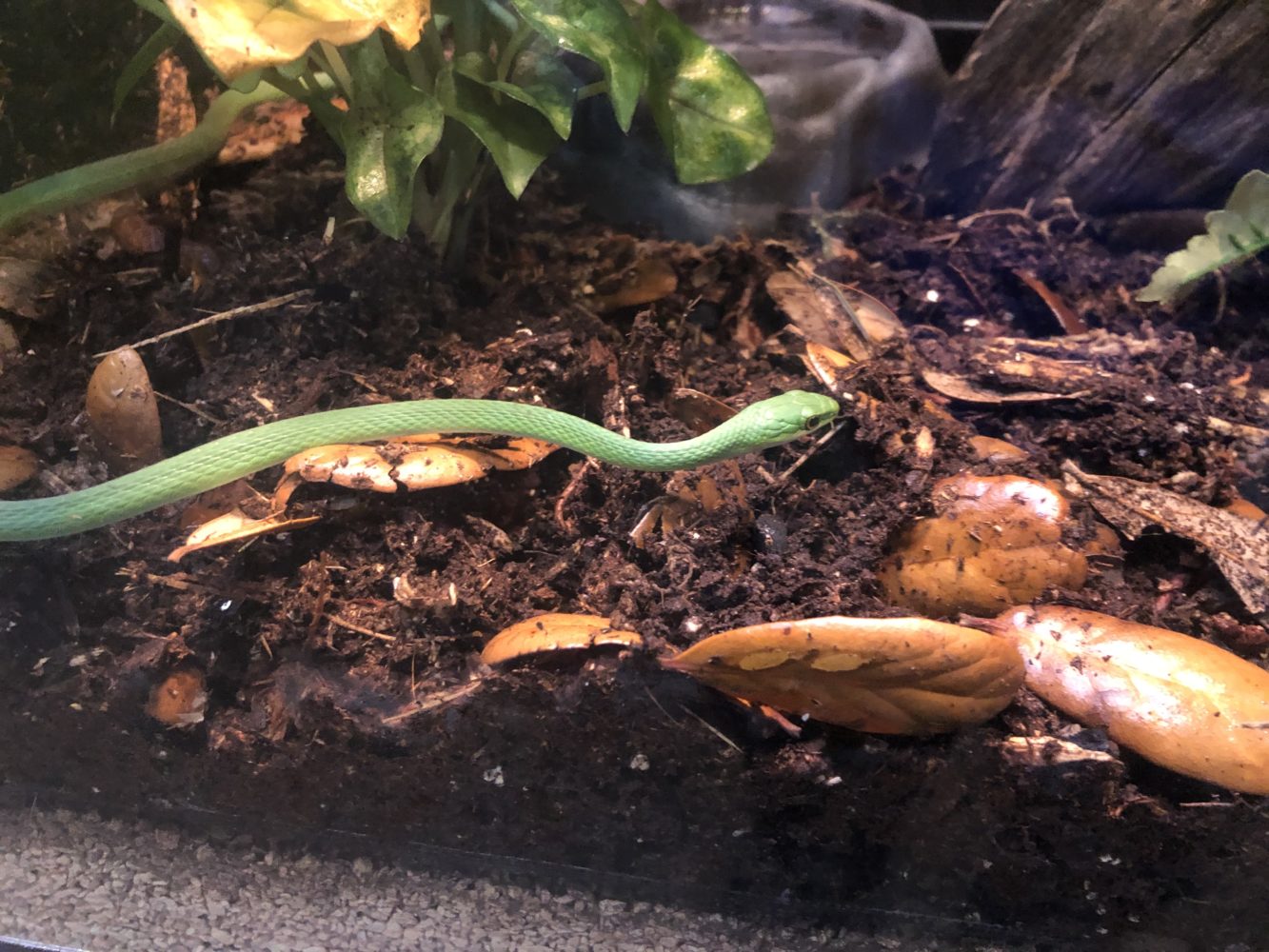
So far, the Nature Center has converted three enclosures in the Appalachian Station to bioactive, with more in the works. The most recent renovation was for Spazz and Stubs, the rough green snakes. The good news for anyone interested in going bioactive at home is that premade kits exist that make it an easy step-by-step process, but plenty of zoos and hobbyists do the research and craft their own ecosystems from scratch. 

We started with a drainage layer and screen under the soil. Our native species require a mid-to-high humidity level, and we don’t want the soil holding water. The soil, primed with beneficial microorganisms and nutrients, was mixed with leaf litter and sphagnum moss to provide cover and food for the invertebrate “clean-up crew” that does the heavy lifting of a bioactive enclosure. Harmless springtails (tiny ‘snow fleas’ with no relation to actual fleas) and isopods (‘rolly-pollies’ or ‘pill-bugs’) break down organic waste and keep the soil healthy for the plants as well as reducing the amount of time the human caretakers spend cleaning. Live plants utilize the animal waste while helping maintain proper humidity and providing natural textures, smells, and even tastes for the animals themselves. The Nature Center incorporates both live and artificial plants to ensure we can match every environmental need of the animals. To complete the picture, specialized lights provide the wide spectrum necessary for both plants and animals.

The next time you visit the littlest locals in the Appalachian Station, check out how their habitats are always changing. Everyone in the picture benefits: the keepers, with less time cleaning and more time enriching the lives of the animals under their care; you, the visitor, with more natural environments and behaviors to admire; and best of all the animals, who benefit from having a little slice of the wild crafted just for them.

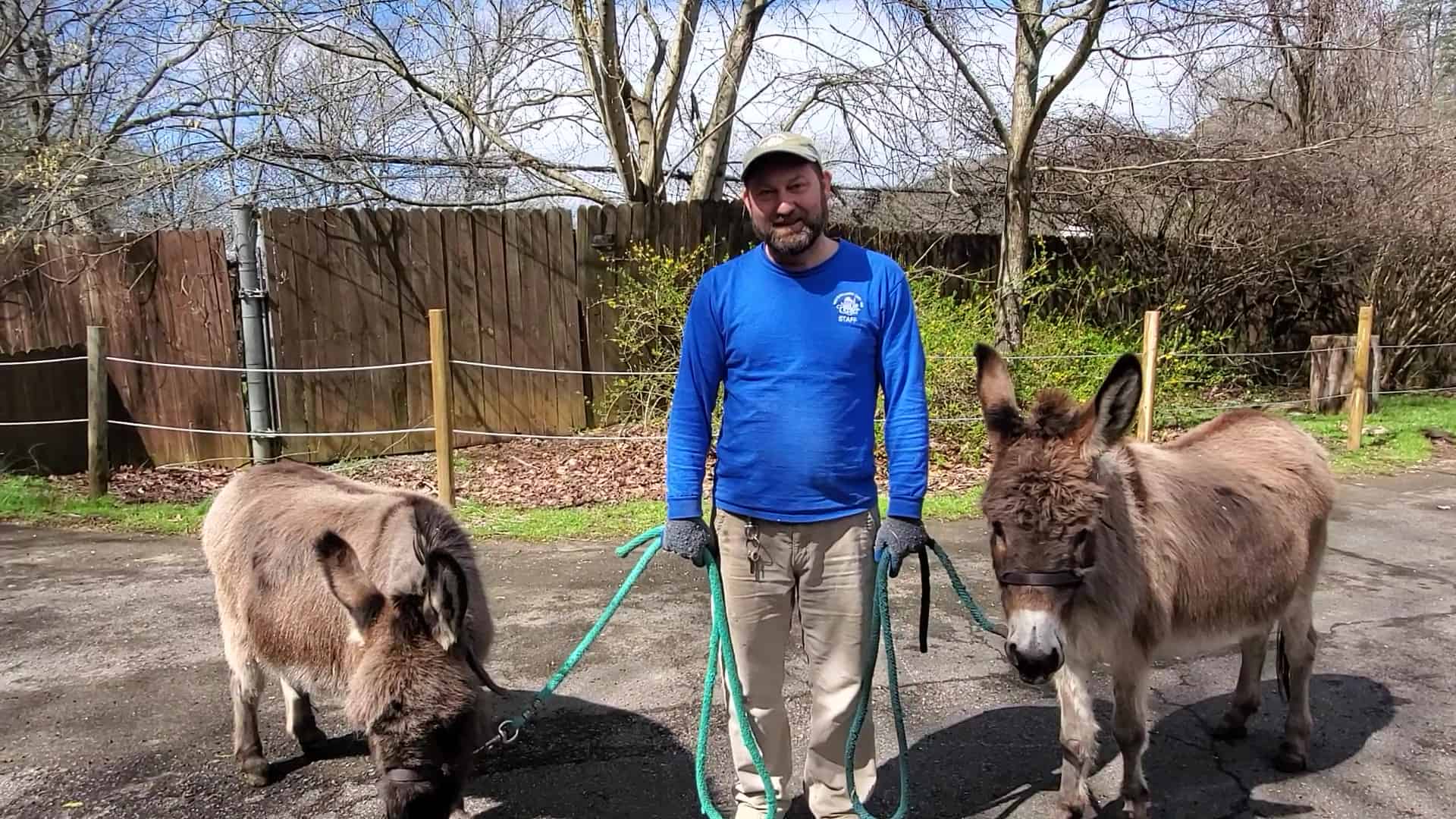
A Nature Center employee guides two donkeys.

Nature Center connects with people virtually amid COVID-19 closure; Friends of the WNC Nature Center seek donations after significant loss of revenue

On average, 30,000 guests visit the WNC Nature Center in March and April. This year, only 3,700 visited in March before the gates were closed due to the COVID-19 pandemic. 

Nature Center Director Chris Gentile says it’s an unprecedented time: “The Nature Center is typically closed just four days a year – Thanksgiving, Christmas Eve, Christmas Day, and New Year’s Day. Our animals have never gone this long without seeing the public, but the animal care team is there seven days a week making sure they’re well-cared-for and getting the enrichment and interaction they need.” 

Temporarily closing the Nature Center has caused a significant loss in revenue for the Nature Center, which is home to more than 150 animals and relies on admission ticket sales to offset animal care costs. 

Spring break and early summer are some of the Nature Center’s busiest times, but it’s not just ticket sales that are being missed. The Friends of the WNC Nature Center’s revenue streams have also taken a big hit, as the nonprofit manages many programs that are generated by admissions-related spending.

Friends Executive Director Karen Babcock has seen a 90 percent loss of fundraising revenue since the Nature Center’s temporary closure on March 13. “With the Gift Shop closed and Nature Center Memberships lagging, plus cancelled events such as behind-the-scenes Wild Walks, birthday party rentals, and the May Brews and Bears, fundraising has been challenging. The positive is seeing Nature Center and Friends staff working together creatively to create new income streams to support the Nature Center in a time of great need.”

Just as the animals are adjusting to their new normal, the Friends and the Nature Center are evolving to offer free and engaging videos to the community. “The Nature Center has always been committed to connecting people with the plants and animals of this area. And we’re still doing this during our closure,” says Friends Development Director Kate Frost. “We’re engaging with educators and nature lovers by virtually connecting them to the Nature Center through educational and fun videos on our social media channels.” 

Soon after it closed, the Nature Center began offering virtual animal experiences through its social media channels. Nature lovers can connect with the animals and learn more about them with twice weekly videos posted on the WNC Nature Center’s Facebook page ( www.facebook.com/WNCNatureCenter). Videos have included Sicilian donkeys Eeyore and Willy taking a leisurely stroll through the Nature Center to visit the cougar, gray wolves, and red wolves. Facebook followers have also learned of the possible pregnancy of Karma and Garnet, the Nature Center’s breeding pair of critically endangered American red wolves, who would give birth to pups by May if they bred successfully. 

Despite decreased revenue due to the temporary closure, neither the WNC Nature Center nor the Friends of the WNC Nature Center has laid off or furloughed any employees. Animal care staff and essential personnel are still on-site taking care of the animals daily, with the remainder of staff working remotely. With both organizations continuing to care for animals and working to provide engaging virtual nature education, the Friends of the Nature Center are asking for the public’s support during this difficult time through donations and memberships.

“Memberships and donations are our only fundraising revenue during this time, and we need our community’s help to ensure that we can continue to support the WNC Nature Center,” says Babcock. “The Nature Center is an essential part of life in Western North Carolina–now more than ever, your help is needed!” 

You can support the Friends of the WNC Nature Center by visiting www.wildwnc.org/support to donate, symbolically adopt an animal, or buy or renew your annual membership. All memberships purchased during the closure will begin on the day the Nature Center reopens to ensure a full 12 months of benefits. 

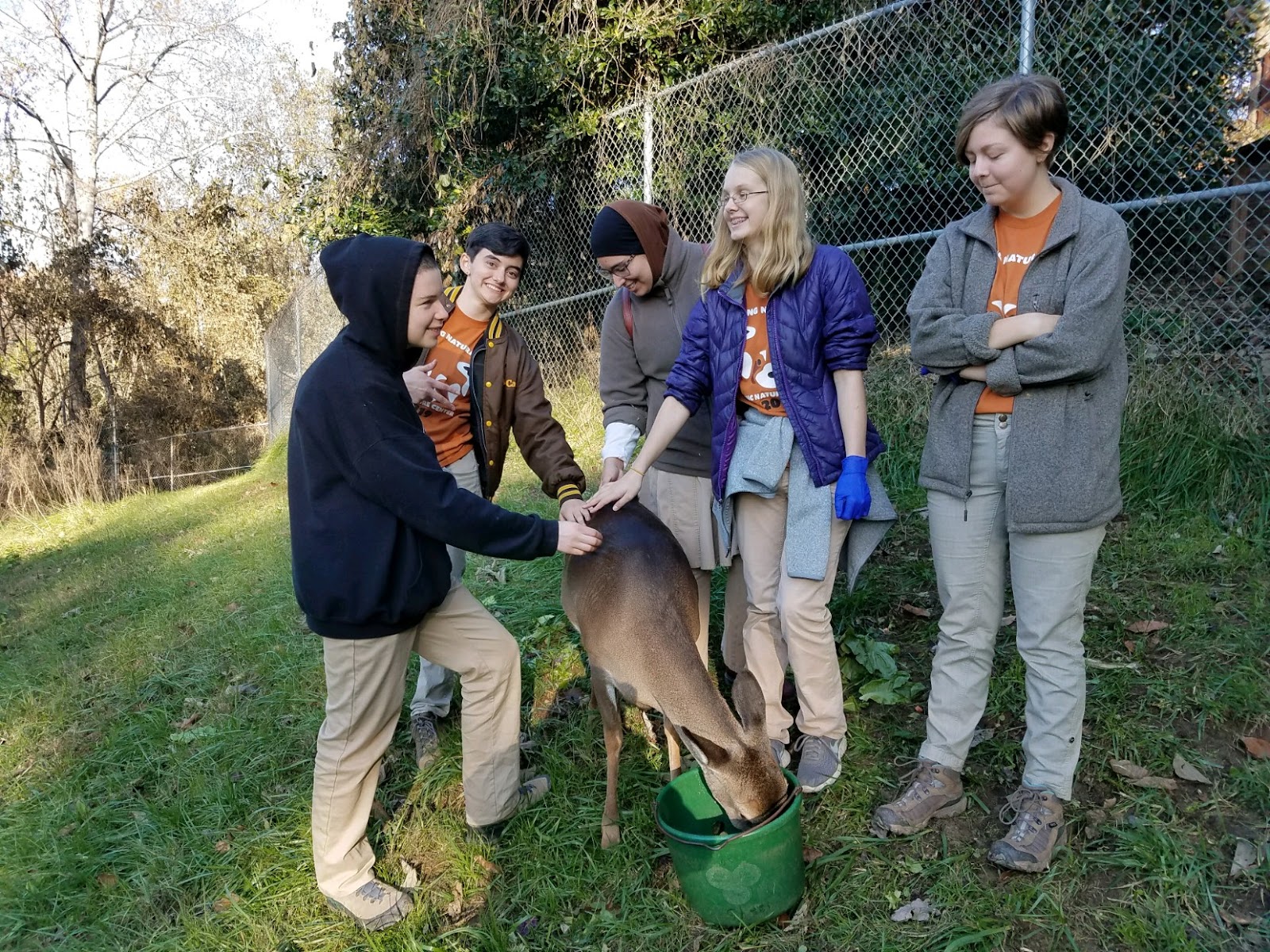
Young Naturalists look at river specimens.

Teens Walk on the Wild Side at the WNC Nature Center

The Nature Center’s teen volunteers celebrated the end of the Fall 2019 Young Curators season by surveying the Swannanoa River for mudpuppy salamanders. Kendrick Weeks, the Western Wildlife Diversity Supervisor for the NC Wildlife Resources Commission, presented to the teens on wildlife surveys and monitoring the Commission is doing in Western North Carolina. Some of the native species he spoke about included flying squirrels, hellbender salamanders, several species of bats, freshwater mussels, bog turtles, and brook trout.

After the presentation, Young Curators took to the field! We hiked down to the banks of the Swannanoa River to pull up aquatic salamander catch-and-release survey traps that were set out the day before. We didn’t pull up any mudpuppies, but Young Curators got to see some chubs and sunfish up close before releasing them back into the water. This special experience gave our teen volunteers the opportunity to dip their toes into one of many potential wildlife and conservation careers.

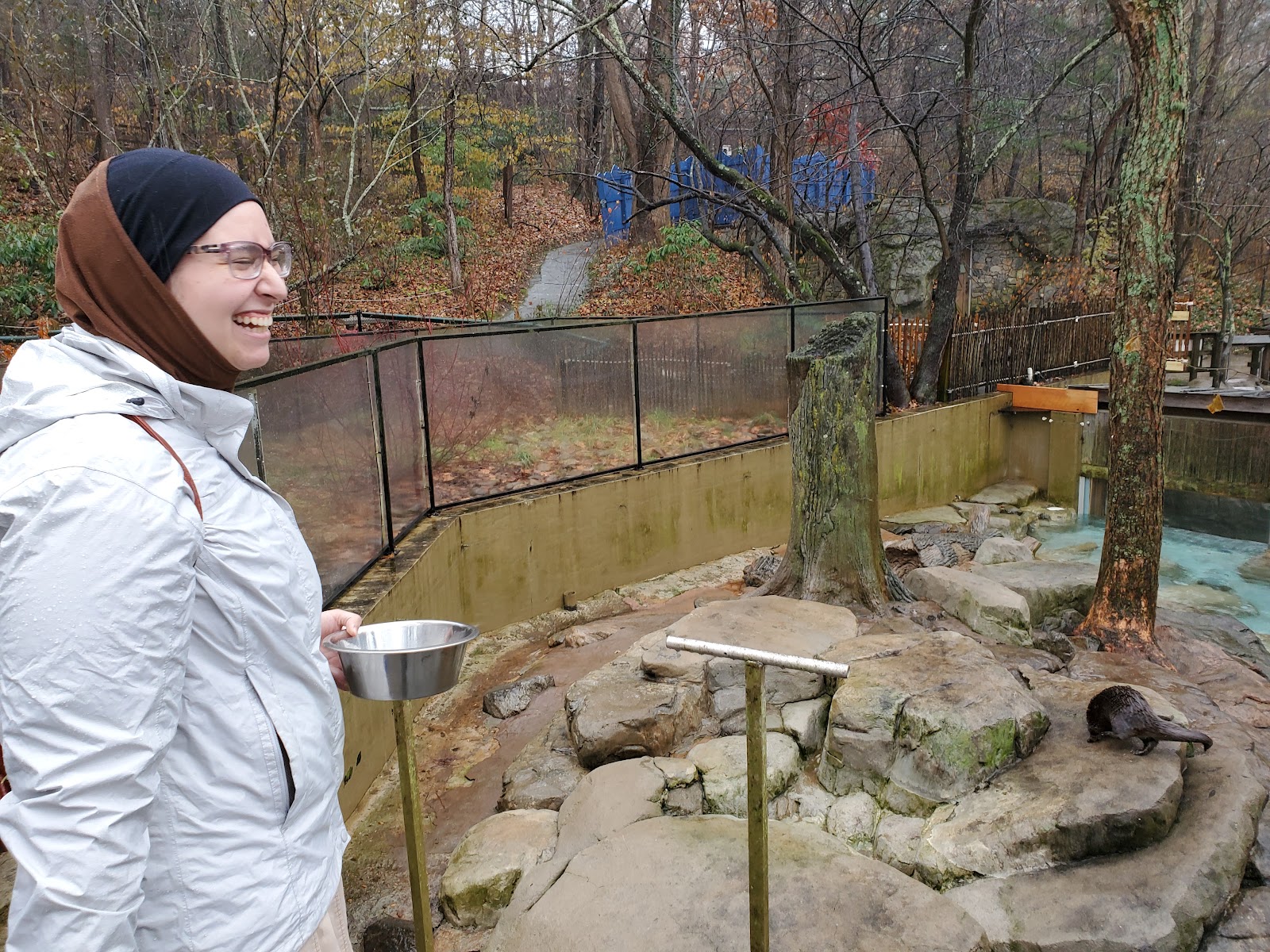
Working with wildlife is not limited when you’re a Young Curator! Last fall, Young Curators also got to meet the Nature Center’s white-tail deer, Becca, and feed the river otters, Olive and Obi Wan. They contributed over 200 volunteer hours to assisting staff with animal care, including making animal diets, cleaning animal habitats, handling the education snakes and turtles for guests, assisting with events, and doing special projects that support Nature Center operations and augment guest experience.

The Young Curators program is an advanced volunteer opportunity for a select group of teens committed to working weekend afternoons at the Nature Center during the Fall and Spring semesters. The program is designed to offer interested and hard-working teens a taste of some careers in wildlife and conservation. Depending on the season, Young Curators may have the opportunity to work independently, with each other, and with Nature Center staff to assist with basic animal care and handling, event planning, environmental education and interpretation, wildlife surveying and conservation field work, and exploring the operations of AZA accredited facilities.

If you’re a local teen 14-18 years old and this sounds like an experience you’d be interested in, consider diving deeper into wildlife and conservation career exploration by applying to the Young Curators program for Spring 2020! Because of the limited spots available for this advanced position, the application process is highly competitive. Be sure to demonstrate your interest, commitment, and what you bring to the team in your application.

Previous experience as a Young Naturalist is preferred, so you are encouraged to apply for and successfully complete the summer Young Naturalist program (for 13-17 year olds). Demonstrating excellence and dedication in the Young Naturalist program supports your application to the Young Curators program in following seasons. New volunteers to either program will need two letters of recommendation along with a completed application.

Find Young Naturalist and Young Curator applications and directions on how to apply here: https://wildwnc.org/teen-volunteer-programs-wnc-nature-center

If you have any questions about the programs or application process, you can email the Teen Program Coordinator, Alayna Schimdt, here: [email protected]

An outreach education program in front of a classroom.

Bringing the WNC Nature Center to You!

Visiting the WNC Nature Center gives you the chance to see the plants and animals of the Southern Appalachian mountains. Whether it’s the red pandas, whose distant cousins roamed our land more than five millions years ago, or the red wolves, who are fighting to survive with only 25 wild wolves left in the world, you are bound to experience a connection and leave with a better understanding of your place in the natural world around you.

But some people in our community are unable to visit the Nature Center firsthand. Schools may not be able to afford a fieldtrip, retirement communities may have seniors with mobility issues, and some families may have budget or transportation barriers as well.  

A few years ago, the nonprofit Friends of the WNC Nature Center, saw an opportunity to provide an outreach education program that brought the Nature Center to people who couldn’t physically visit. Tori Duval is the outreach educator who brings this vital program to underserved communities, school groups, retirement communities, and libraries in Buncombe County and the surrounding counties.

Instead of regularly priced admission costs, the program offers low-cost education to groups of 10 to 150+ within 50 miles of Asheville, NC. These educational programs feature live animal ambassadors and are designed to meet NCSCOS education standards. You can find out more about program offerings and costs at www.wildwnc.org/schools-home-schools.

Despite being a fairly new program, the outreach initiative has already made incredible strides. In 2018, the outreach program was awarded a Significant Achievement in Education award by the Association of Zoos and Aquariums. This was the first ever AZA education award presented to the Nature Center. That year, Tori served 9,200 individuals and served four Tier 1 Counties.

Tori also recently completed her environmental education certification through the North Carolina Office of Environmental Education and Public Affairs. This rigorous program requires 180 documented hours of professional development workshops, community outreach, teaching experiences, site visits, and independent study. It establishes standards for professional excellence in environmental education for formal and non-formal educators. The program also enhances the ability of educators and organizations to provide quality programs and resources, benefiting local communities while investing in the future of North Carolina’s environment.

The Songbird Garden at the Nature Center.

Songbird Garden Gets a Face Lift!

The Songbird Garden has been a long-time staple at the WNC Nature Center, and we are happy to announce that we were able to give it a bright and inviting face lift this summer! Education Specialist Chrissy Cochran and Education Art Intern Evyn Caiazza collaborated to create a peaceful space that is not only educational, but visually stunning. Evyn is a Biological Illustration major at The Cleveland Institute of Art, and she used her artistic talent to help design, paint, and assemble this project!

Songbird gardens are a great way to help native birds by simply providing them with the necessities of life – food, water, shelter, and space. This Certified Wildlife Habitat is a wonderful example of how to manage an easy and cost effective space that will not only beautify your yard, but also help the survival of many native species. Next time you visit the WNC Nature Center, please be sure to stop by the Songbird Garden to learn more about birds and how you too can help them thrive in their natural environment!