OPEN TODAY: 10AM-4:30PM Last Admission @ 3:30

Asheville’s Wildlife Park Reopens March 17

The WNC Nature Center will reopen to the public on Monday, March 17, five and a half months after closing due to the devastating effects of Tropical Storm Helene, which caused significant flooding that destroyed roads and the main bridge to the Nature Center.

Before opening to the general public, the Nature Center will open a week earlier for Friends of the WNC Nature Center members from Monday, March 10, to Sunday, March 16. People can buy or renew memberships online at www.wildwnc.org/membership or at the Membership Office and still be able to take advantage of members-only week. No admission tickets will be sold during this members-only week.

“After witnessing the devastation caused by the flooding of the Swannanoa River, we thought it would be at least a year until we could safely reopen,” recalls Nature Center Director Chris Gentile. “Thanks to the steadfast work of our City workers, the NC DOT, and a myriad of community partners, we are ready to welcome guests back.” However, visitors to the Nature Center will need to alter their typical route to accommodate for the loss of the Gashes Creek Bridge.

Directions to the WNC Nature Center (75 Gashes Creek Road, Asheville, NC 28805)

  • Drive to the Nature Center as normal, turning from Swannanoa River Road onto Azalea Road.
  • Instead of turning right to cross the bridge as usual, continue straight for half a mile. This road is now two-way all the way to the roundabout. This two-way traffic pattern is new and can be narrow in places, so please use caution and drive carefully.
  • At the roundabout, take the first right. A traffic signal has been installed on either side of the one-way metal bridge.
  • After crossing the metal bridge, turn left on Gashes Creek Road and enter the Nature Center’s parking lots.
  • Guests will depart from the Nature Center in the same way.

Outreach Educator Cassie with a box turtle animal ambassador

Gateway to the Southern Appalachians construction progress

While the Nature Center has been closed, the Friends of the WNC Nature Center have leaned into their mission of connecting people to the wildlife of the Southern Appalachians. From November 2024 to February 2025, their two-person Outreach Education team traveled one thousand miles across the region, providing affordable, hands-on wildlife experiences to 1,200 individuals in schools, libraries, and community centers.

“Helene left a lasting impact on Western North Carolina, damaging parks, trails, and waterways that serve as vital outdoor learning spaces for families,” says Friends Executive Director Kate Frost. “Many were uncertain about where it was safe to explore and engage with nature. Our Outreach Educators worked tirelessly to connect our communities with nature through special animal interactions and educational moments during this time.”

There is plenty to look forward to once the Nature Center reopens next month. During their closure, significant progress was made on the construction of the Gateway to the Southern Appalachians, and by summer, guests should be able to enjoy a butterfly garden, renovated barn and farmyard space, and an expanded Gift Shop.

Upon reopening on March 17, the WNC Nature Center will be open seven days a week from 10am until 4:30pm with last admission at 3:30pm. Friends members can enter the park at 9:30am. Beginning this year, the Ticket Office will also be cashless. Tickets are available for purchase in advance online or in person using credit/debit and prepaid cash cards.

In addition to early entry to the Nature Center the week of March 10, Friends of the WNC Nature Center members receive free daily admission to the Nature Center; discounted admission to over 450 zoos, aquariums, and science centers nationwide; and discounts on special events, programs, and at the Nature Center Gift Shop. Memberships support the daily care, enrichment, veterinary care, and conservation of the animals who call the Nature Center home. To find out more about becoming a member, visit www.wildwnc.org/membership.

More Than A Zoo: Leland Arnsdorff

 More Than A Zoo: Highlighting the personal connections and the broader impact of the WNC Nature Center in its 100th year

Each month during our centennial year, we’ll be interviewing people who have had an impact on the Nature Center. We’re kicking off this series with Q&A with Leland Arnsdorff. Leland is a volunteer docent whose passion for wildlife conservation is contagious.

Meet Leland Arnsdorff

What is your role at the Nature Center? I am a docent. In my volunteer position, it is my privilege to share biofacts, information, and the story behind the animal residents of the Nature Center with both adults and children. Being a docent is more than just teaching people; it means engaging guests in a way so that they develop their own appreciation for the Nature Center’s animals as well as local wildlife. I want people to appreciate the wildlife that is in their backyards. I also take care of various habitats by ensuring their viewing points are clean. I am a window washer! I am also a philanthropist and part of the Friends of the WNC Nature Center’s Appalachian Stewards Society, helping ensure that areas of financial need are supported.

Personal Connection

How did your journey with the WNC Nature Center begin, and what keeps you coming back?

We moved here in 2020 to start fresh, and I knew that I wanted to get involved in a local organization to learn more about the area and meet new people. Being a retired elementary science teacher, the Nature Center really appealed to me, especially when I realized they had docent shifts, which are similar to teaching. I was thrilled to learn about the wildlife of the region and pass that along to our guests. 

The animals and programs kept me coming back each time. It met my interest in teaching as well as being with animals. The staff have been so warm and welcoming. It quickly became my happy place!


Can you share a favorite memory or experience at the Nature Center that stands out to you?

When I first started as a docent, I was with the otters. It was during the pandemic and shortly after reopening. To watch the kids’ faces as they stroked the otter pellet, and then as we talked about the otters’ different adaptations, to see their excitement – it was so much fun. Same was true with the red wolf puppies, then the bobcat kittens – to see the magic in their faces and be so attracted to the animals – to see it was all so special to me.

I was up at the red wolf habitat filling in one day. And I asked a little girl if she’d seen the bobcat kitten, and she said “he is STUPID cute,” and that made me laugh. I get a kick out of how kids talk about the animals.

What is the greatest reward of your involvement with the Nature Center?

The Nature Center has given me a way to give back to the area and the wildlife that I actually have the opportunity and pleasure to see around my neighborhood. It’s important for me to be able to give back to an area that has been so welcoming. The greatest reward is seeing the look on a guest’s face, child or adult, when they see the animals and make a personal connection either through something learned or through seeing the animal in person. It is these “aha” moments that are my greatest reward.


Mission & Impact

In your view, how does the WNC Nature Center go beyond being just a zoo?

The mission, in and of itself. We’re not just showcasing animals. We’re showcasing the wildlife that existed and still exist in Western North Carolina and educating people about them. Education is so important, both about the animals and the environmental impact on the animals.

Looking to the Future

What hopes do you have for the next 100 years of the WNC Nature Center?

More immediately, to grow and develop the docent program even more, in order to have more docents available every day for the public. 

How can the community support the Nature Center’s mission moving forward?

Visit more than once. Keep coming back. Continue to support the Nature Center through membership, donations, and volunteerism. You see new things each time you come back; you’ll learn things that you didn’t see the first, or second, or third time. 

What role do you see education playing in the future of wildlife conservation?

Education is CRUCIAL, especially with the younger generation. The environmental effects on all the wildlife in WNC. That’s one of the things that drew us to Asheville. That we could walk down the street and see turkey and bear and deer and fox. We are visitors in their environment; they were here first. The Nature Center walks the walk in its mission and practice. The way volunteers are coached and taught to share with guests is critical in the continuity of environmental stewardship in WNC. The way the team teaches about interpretation and how to share with the public is fascinating and impactful.

Fun Reflection

If you could be any animal at the WNC Nature Center for a day, which one would you choose and why?

I would be American River Otter Obi-Wan. I love the water and to be able to swim outside in the winter, enjoy the snow, and not be cold would be invigorating! Eating fish three times a day would be fantastic! Not a bad way to be. 

What’s one surprising fact about the Nature Center that most people don’t know?

The behind-the-scenes information. How the animals are kept comfortable and safe. That there are night houses for the majority of our animals. And those night houses are meant to protect the animals, such as during a storm. The animal care team is constantly considering the animals’ welfare and making sure they are as safe as possible – morning, day, and night. 

How would you describe the Nature Center in three words?

    1. Conservation
    2. Illuminating
    3. Joy-filled

Are you interested in learning more about becoming a volunteer at the WNC Nature Center? Visit dev.wildwnc.org/volunteers. Want to learn more about the Appalachian Stewards Society? Email Cindy at [email protected].

100 Years of Wild; 50 Years of Friends

 Asheville’s Wildlife Park Marks 100 Years of Wildlife Conservation and Friends of the WNC Nature Center Celebrates 50 Years of Support

The WNC Nature Center is proud to announce the celebration of its 100th anniversary as a zoo, marking a century of inspiring visitors to foster a deep connection with wildlife. In tandem with this milestone, the Friends of the WNC Nature Center, the nonprofit dedicated to supporting the zoo’s mission, is also commemorating its 50th anniversary. These twin celebrations highlight the zoo’s remarkable legacy in animal care, education, and conservation.

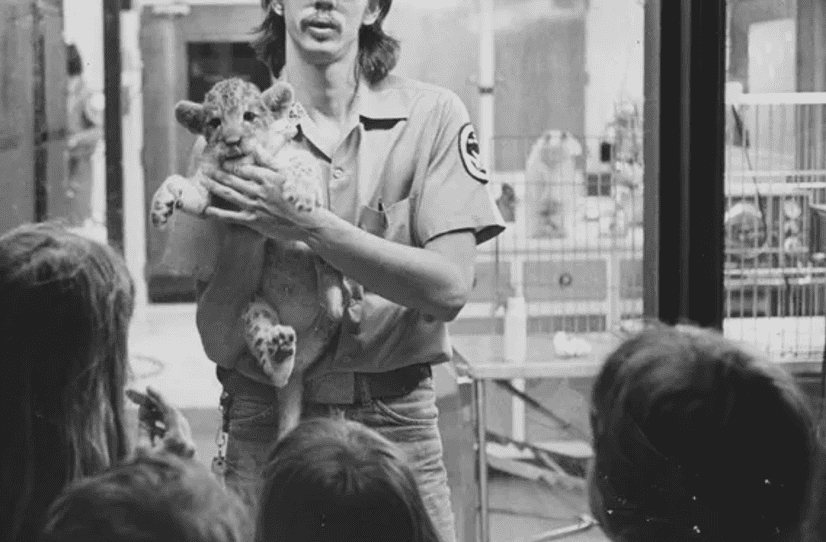
Since it opened as Recreation Park Zoo in 1925, the WNC Nature Center has undergone its own metamorphosis, evolving from a collection of exotic animals – including elephants, lions, monkeys, zebras, and camels – to animals native to the Southern Appalachians from the past to the present. From species like the river otter and hellbender to red wolves and red pandas, the WNC Nature Center has told the story of the unique biodiversity of the Appalachian region for decades. In 2023, the WNC Nature Center welcomed more than 192,500 guests, of which 75,000 were children, through its gates.

2024 was on track to be another standout year for the Nature Center’s visitor attendance when disaster struck. Due to Tropical Storm Helene and its devastating impact on the region, the WNC Nature Center has been temporarily closed since September 27 and will remain closed through the first part of its centennial year.


(L-R) Millie Elmore, Jeanne Cummings, and Dershie McDevitt, three of the Founding Mothers

The Nature Center is no stranger to closure or threat of closure. Before Tropical Storm Helene, the WNC Nature Center was closed for six months in 2020 due to the COVID-19 pandemic. The zoo was also closed from 1943 to 1959 as a result of World War II and financial hardships, and in 1973, the US Department of Agriculture recommended closure due to conditions at the zoo. As a result, through a generous donation from the Junior League of Asheville and a campaign by six of their members (Jeanne Cummings, Sally Rhoades, Dershie McDevitt, Millie Elmore, Martha Gentry, and Audie Bayer) now lovingly called the Founding Mothers, the Children’s Zoo and Nature Center was born, along with the Friends support organization. The grand opening of the newly re-visioned Nature Center occurred in May 1977.

“We have such a unique history,” says Kate Frost, Executive Director of the Friends of the WNC Nature Center. “Under threat of closure, the Friends came into existence two years prior to the Nature Center to herald in a new era for our wildlife park. Despite so many obstacles in our storied past, our two organizations have adapted and shown resiliency, and our mission has remained unchanged.”

Officially established in 1975, the Friends of the WNC Nature Center has been a vital partner in the zoo’s success, ensuring the resources and financial support needed to fulfill its mission. Over the past 50 years, the nonprofit has raised millions of dollars to fund animal habitats and care, educational initiatives, and conservation programs. Its commitment has been instrumental in the zoo’s growth, supporting notable projects like the new Front Entrance, Red Panda Habitat, and most recently, the Gateway to the Southern Appalachians.

Complete with a butterfly garden, a renovated barn and farmyard space, and an expanded Gift Shop, the Gateway to the Southern Appalachians project broke ground in May 2024 with an expected completion by summer 2025. Though progress was initially delayed due to the Nature Center’s closure with Tropical Storm Helene in late September 2024, construction was able to regain lost time due to the park staying closed and not having to take guest experience into consideration.

Even without it being a milestone anniversary for both organizations, 2025 is already on track to be a momentous year with plans to reopen in the spring and complete the Gateway to the Southern Appalachians project by summer.

Chris Gentile has been the director of the WNC Nature Center since 2009 and has played an integral part in the recent history of the Center. “One exciting part of our Gateway project will be the unveiling of a 75-foot history timeline along the exterior of our barn wall. The history wall will feature our first 100 years, including fun facts and important milestones, like our accreditation by the Association of Zoos & Aquariums (AZA) in 1999.” Notably, the Nature Center is one of just eight facilities open to the public in North Carolina that is accredited by the Association of Zoos & Aquariums.

The Nature Center and the Friends of the WNC Nature Center will commemorate their historic milestones throughout the year with special anniversary celebrations, educational programs, fundraising initiatives, and community outreach activities:

  • Heart of the Wild Gala: In March, the Friends will celebrate their anniversary with a ticketed event that honors the Founding Mothers’ significant contributions.
  • History Wall: A commemorative exhibit displaying the zoo’s history, featuring archival photos and highlights from 100 years of animal care and education will be unveiled at part of the Gateway to the Southern Appalachians project.
  • Community Engagement Programs: Special educational programs, guided tours, and other opportunities for visitors will be promoted throughout the year.
  • “More than a Zoo” Series: Monthly interviews with key stakeholders will share centennial stories highlighting the impact the WNC Nature Center and the Friends have had on this region. 
  • Social Media Campaign: The Friends will be rolling out an engaging social media campaign that will highlight historical facts and trivia relating to the centennial.
  • One Hundred More Years of Wild: This is an opportunity for long-time supporters to make philanthropy-defining gifts that will lead the WNC Nature Center into a new century of impact. To learn more about legacy gifts, please contact Friends Director of Development Cindy Smith at [email protected]

“We are honored to have played a role in connecting generations of visitors with nature and inspiring them to protect and conserve wildlife,” says Frost. “This was all made possible because of the vision of a few, and we are deeply grateful to our community, members, and donors for their role in helping us realize this dream.”

“What we’ve collectively accomplished to date is worth celebrating, and what we can learn from it as we look to the future is inspiring,” says Gentile. “The Friends and the Nature Center are a dynamic powerhouse of a team, and we’re excited to embark on our next century of providing meaningful connection to the plants and animals of this region.”

For more information about the WNC Nature Center’s 100th and the Friends of the WNC Nature Center’s 50th anniversaries, please visit www.wildwnc.org/celebrate, where visitors will find a centennial timeline and photos from throughout the years.

Animal Update after the Storm

After every storm, nature blooms again; and just like nature, the WNC Nature Center will reopen in the future. Until then, the animals are being well taken care of by the Nature Center’s incredible team. Let’s learn how a few species adapted during the weeks following Tropical Storm Helene.

Wild animals need food, water, shelter and space to survive. Animals under human care, like those at the Nature Center, have the same needs, but they are provided by their incredible keepers. For weeks following Helene, the Nature Center, along with other community members, did not have potable water. So, similar to many individuals during that time, the Nature Center received a little help from a friend to meet the needs of a few animals.

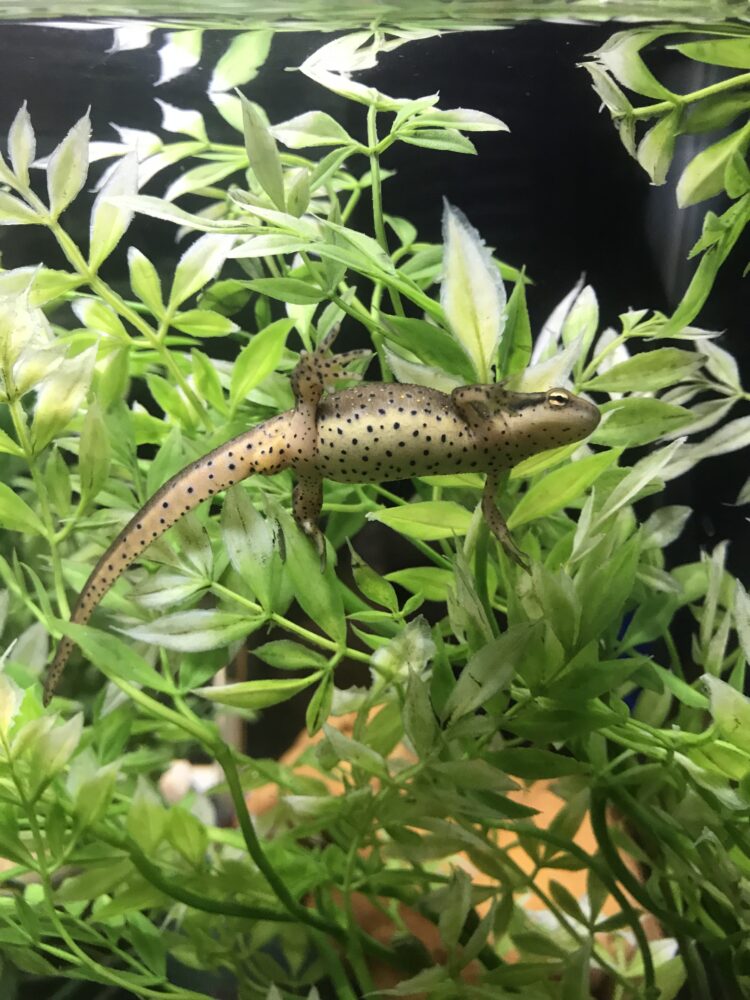
Appalachian Wildlife Refuge is a wildlife nonprofit that coordinates wildlife rehabilitation efforts in WNC. Some of the animals at the Nature Center came to us from Appalachian Wild. After Helene, a few of the Nature Center’s amphibians and reptiles were selected to be housed at AppWild. The few animals that were moved were species who naturally are more sensitive to water quality.

Hellbenders are an example of a species that need good water quality to survive. Why is this important? Hellbenders have external gills during their larval stage, but around 2 years of age, their gills disappear and they breathe entirely through their skin. A frill, a loose fold of skin, runs from the base of their neck down to their tail on each side of their body to increase surface area. They need clean, oxygen rich water to survive. This makes them a bioindicator for their ecosystem. A bioindicator determines the overall health of an ecosystem. Without access to clean water, their population would not thrive.  

Another animal that relies on clean water is aquatic turtles. Aquatic turtles, like the spotted turtle, live in shallow, clean and slow moving wetlands. This type of ecosystem provides adequate food for the turtles. Thankfully, our friends at Appalachian Wild were able to support the Nature Center’s hellbender, aquatic turtles and newts after Helene. They were able to provide clean water from their well for the animals.

Adaptations are how animals thrive in the wild, and the Nature Center’s animals adapted well to their temporary home. We are thankful to the Nature Center’s staff and Appalachian Wildlife’s staff for keeping the animals’ care and safety top priority. The WNC Nature Center’s animals are resilient, and we all look forward to seeing you when we can reopen!


Until the Nature Center reopens, private tours and other small events are being offered. For details, visit dev.wildwnc.org/events. The Outreach Education team is also offering offsite programs with ambassador animals. Learn more at dev.wildwnc.org/outreach-education.

Tropical Storm Helene

 A Message from the Friends of the WNC Nature Center Executive Director

Wednesday, October 2, 2024

Due to significant flooding and impassable roads in our region from Tropical Storm Helene, the WNC Nature Center is CLOSED and all events and programs in the foreseeable future are cancelled. We are relieved to share that all of our animals are safe and accounted for, and our staff are present and taking care of them. There is minimal damage to the habitats, but Swannanoa River Road and the main bridge to the Nature Center were washed away. There is no current timeline for reopening. We will undoubtedly need your financial support over the coming months as we recover. However, there are also greater immediate needs in our community right now, and we ask you to consider the entire Western North Carolina region as we rebuild together.

First and foremost, if you call the Western North Carolina mountains your home, I hope you are safe and have the resources you need. I don’t think anyone anticipated how dire this situation would become, and we all held a collective breath waiting for spotty cell service to let us know about the state of the Nature Center and if the animals were alright. Knowing that every single one of our animals made it through the storm safe and sound was a bright moment during this devastating time.

I have been in communication with Nature Center Director Chris Gentile daily, and I was able to visit the Nature Center yesterday to see the damage for myself. Our main bridge access was washed away, along with a good portion of Swannanoa River Road. Thankfully, animal keepers are able to get to the Nature Center and are working in shifts to ensure our animals are well-cared for. Their habitats had minimal damage, but the lack of power and gas has made it difficult to make repairs that are needed.

With the support of the Association of Zoos and Aquariums, as well as several of our zoo neighbors – including NC Zoo in Asheboro and Knoxville Zoo in TN – we have had several teams offer their support. From arborists to welders to generators and car batteries, it’s been a team effort to make the Nature Center safe for our staff and animals during this first critical week.

Please continue to check our website and social media for updates about progress being made around the WNC Nature Center. Our hope is that we will be able to restore bridge access as quickly as possible, reopen, and resume operations. The truth is, there is no real timeline, and this may take months.


As you know, admissions, memberships, Gift Shop purchases, and event revenues all support the operations of the Nature Center. With the Nature Center closed, our ability to support the ongoing care of the animals is diminished. We will rely on our members and donors to help bridge that gap over the coming weeks and months.

Please don’t hesitate to reach out if you have questions. We will continue to share updates, needs, and opportunities with the community, and we are so glad we are all in this together.

Kate Frost
Executive Director
Friends of the WNC Nature Center
[email protected]

PS: If you would like to help sustain the WNC Nature Center over the coming months, please consider becoming a monthly donor. You can go to dev.wildwnc.org/donate and click on monthly instead of one-time to set that up. Because of you, we will get through this!

Pollinator Garden Looks to Take Flight

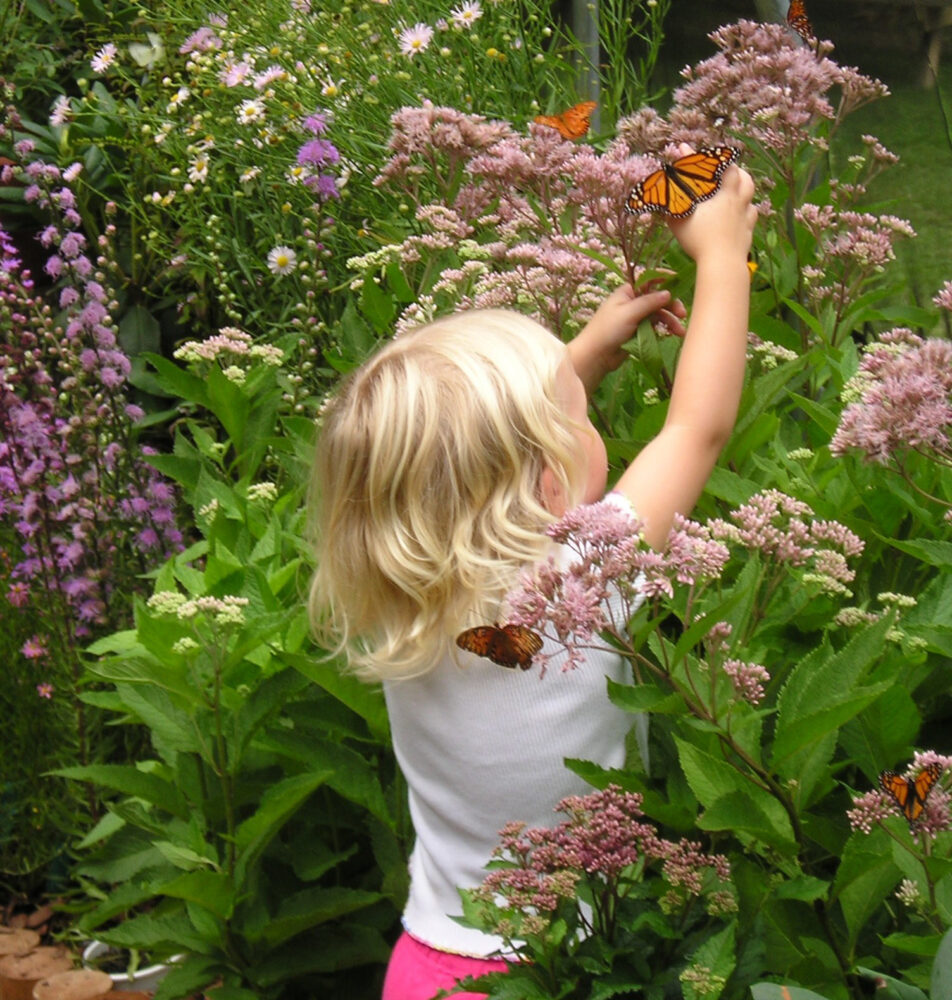
Imagine a garden where butterflies flit about, vibrant flowers and plants reach toward the sun, a play area beckons tiny adventurers, a meadow with tall grass dances in the wind, and chimes sing sweet tunes. It sounds magical, and it’s not so far-fetched! As part of the next phase of the WNC Nature Center’s Gateway to the Southern Appalachians project, a permanent native pollinator garden is in the works. This new garden will feature Nature Play areas, a planted meadow, shaded coverings, an education kiosk – and butterflies, of course! – designed to engage guests
of all ages in the wonders and beauty of our region.

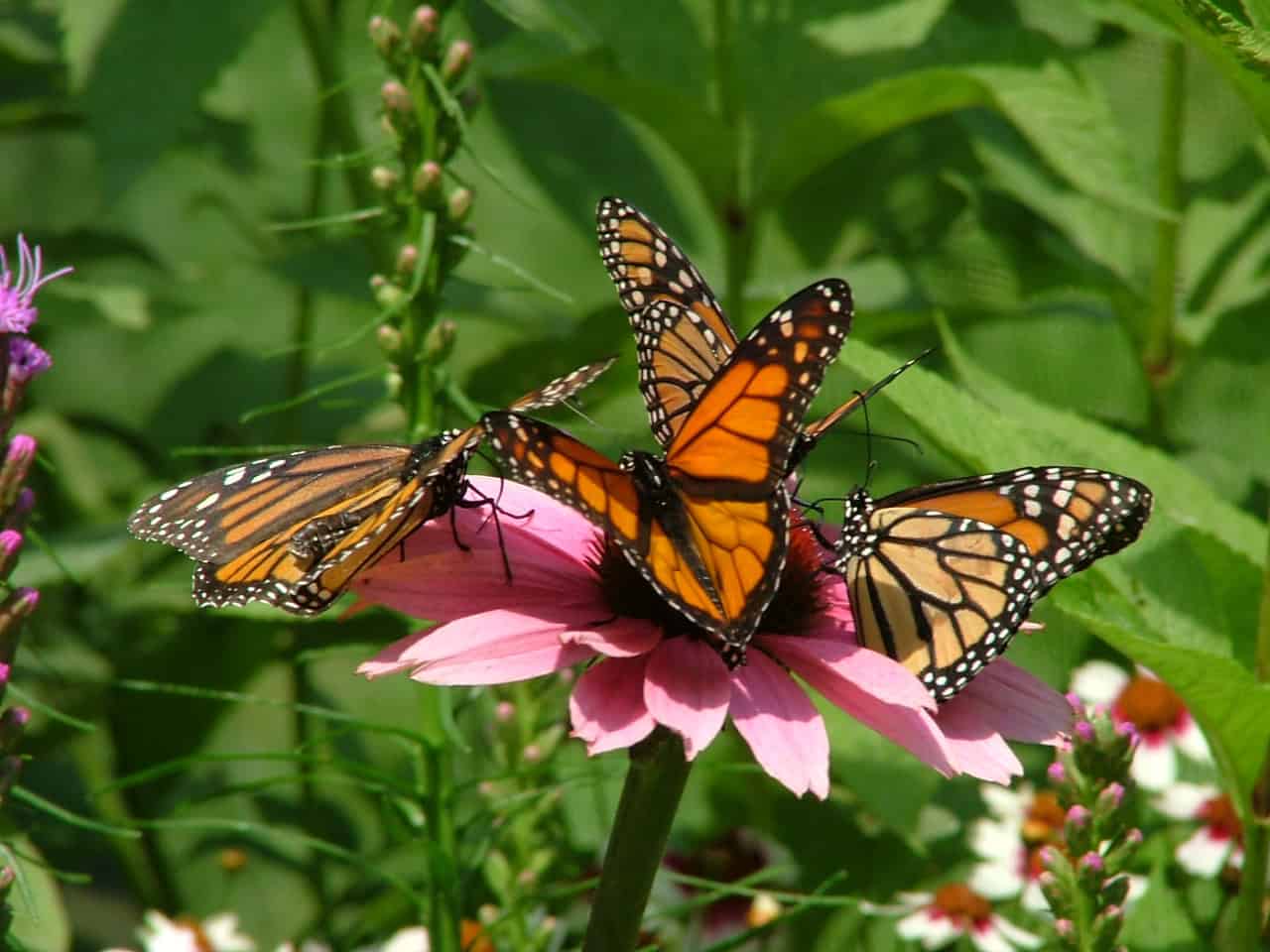
Why butterflies? The butterfly population has significantly declined in recent decades due to habitat loss, pesticide and herbicide use and climate change. Practically, butterflies pollinate your garden, they’re an indicator of a healthy environment, and let’s face it, butterflies make us happy!

The Nature Center first opened a seasonal exhibit called “The Beauty of Butterflies” in July 2004. Guests experienced flowering plants and 20 different species of butterflies in a mesh hoop house. For seven years, summer through early fall, the exhibit provided education on the four stages of the butterfly life cycle, and how to create habitats for pollinators. Due to the popularity of this exhibit, the Nature Center’s
strategic plan included a vision to construct permanent butterfly gardens. Now, it’s time to rebuild, replant and pollinate – for good!

“This exciting project will promote greater guest engagement with the natural world, including nature play and its many research-based benefits,” said Eli Strull, the Nature Center’s Curator of Education and Guest Experience. 


“The addition of fun and creative ways to explore the Nature Center creates more chances for guests to connect with the incredible diversity of life in our mountains. This can also inspire a deeper connection to nature outside of our Center, creating a ripple effect,” said Strull.

The Nature Center encourages nature play throughout its campus and is excited offer offer more options through this project. There are many researched and proven mental and physical benefits of nature play for kids, including:
        ● Social-emotional well-being
        ● Improved relationship skills
        ● Reduced stress, anger and aggression
        ● Increased engagement and enthusiasm
        ● Enhanced attention and improved behavior
        ● Better academic performance
        ● Increased physical activity; reduced risk of obesity
        ● Development of self-awareness and self-management 


Fun time in nature during childhood and role models who care for nature are the two biggest factors that contribute to environmental stewardship in adulthood. To support this critical work, the Nature Center is committed to providing options for even more laughter and learning! The Friends of the WNC Nature Center, in collaboration with the WNC Nature Center, has raised over $250,000 to support this project. $150,000 more is needed to complete it.


Donations can be made online at dev.wildwnc.org/donatetogateway or checks can be made out to the Friends of the WNC Nature Center and mailed to PO Box 19151, Asheville, NC 28815. To learn more about the butterfly pollinator garden and the entire Gateway to the Southern Appalachians project, set to be completed in early summer 2025, visit dev.wildwnc.org/gateway.

WNC Nature Center Economic Impact Report

A new report outlines the significant and far-reaching economic impact of the WNC Nature Center and its nonprofit support organization, Friends of the WNC Nature Center, on Buncombe County and the City of Asheville.
Compiled by Riverbird Research, the report was initiated by the Friends of the WNC Nature Center, a nonprofit organization dedicated to supporting the mission of Asheville’s Wildlife Park. 
“As part of the City’s Community & Regional Entertainment Facility Department, the WNC Nature Center is uniquely positioned as both a draw for tourists visiting the area and a regional gem for our local community,” says Kate Frost, Executive Director of the Friends. “This economic study shows the positive impact of our marketing, visitation, and general existence on this region.” 

The 42-acre WNC Nature Center is one of Western North Carolina’s most treasured assets. For decades, it has contributed to the conservation and biodiversity of the Appalachian region, serving virtually every demographic. Generations have enjoyed visiting and learning about the variety of species of wild and domestic animals, as well as the considerable spectrum of plants. Notably, the Nature Center is one of just nine facilities in North Carolina that is accredited by the Association of Zoos & Aquariums. In 2023 alone, the Nature Center accommodated nearly 193,000 visitors.

The report highlights the substantial contributions of the WNC Nature Center to the local economy not only through direct visitor dollars, but also through the economic operations of the Friends and the City of Asheville in support of the park. Considering both of these impacts, it was estimated that the Nature Center and the Friends made a combined $23 million economic contribution to the Buncombe County economy in 2023. 

The economic report provided a lens for examining the expansive role of the WNC Nature Center within the regional economy, and the ways in which its existence and activities support multiple industries and residents. The report notes that the park’s visitors and related activities:

  • supported nearly 220 jobs, both within the Nature Center and indirectly in the wider community;
  • boosted the County’s GDP by $13.5 million, which cascaded through various sectors, fostering economic growth and stability;
  • and generated roughly $3.1 million in tax revenues. 

Heidi Reiber, Senior Director of Riverbird Research, was pleased by the results of the study. “The WNC Nature Center is a vital asset to the local economy,” says Reiber. “Its increasing attendance and visitor spending are indicative of its continued positive impact on this community.”


“We’ve never doubted that the Nature Center holds a special place in the hearts of local residents,” says Frost, “and the results of this economic study prove that those who have poured into us — the City, our donors and members, and residents and visitors — are receiving a high return on their investment.”

The WNC Nature Center’s impact extends far beyond economic metrics. As a cornerstone of environmental education and wildlife conservation, the Center fosters a deep connection between the community and the natural world. “Conservation education is at the core of our mission,” says Frost. “We believe that the more you know, the more you care, and the more you care, the more you do.” 

By showcasing the diverse wildlife and plant species native to the Appalachian region, the Center provides a unique space where visitors of all ages can connect with the environment on a personal level — whether through watching the playful antics of a river otter, safely sighting a majestic black bear, or hearing the captivating howls of red wolves.

“We are proud to be a place where people can come together to learn about and appreciate the incredible biodiversity of our region,” said Chris Gentile, Director of the WNC Nature Center. “Our mission goes beyond education and conservation; we aim to create meaningful connections between our visitors and the natural world, fostering a sense of wonder and a commitment to protecting our environment.”

As the WNC Nature Center continues to grow and evolve, it remains committed to serving as a premier destination for wildlife exploration and education. The ongoing support from the community and the dedicated efforts of the Friends of the WNC Nature Center, along with funding from the Buncombe County Tourism Development Authority and Explore Asheville, have made possible the latest addition to the WNC Nature Center: Gateway to the Southern Appalachians, a highly-anticipated expansion featuring a butterfly garden, a renovated barn and farmyard space, and a larger gift shop. You can learn more about the project at dev.wildwnc.org/gateway.

Are You a Moth or a Butterfly?

Are you a moth or a butterfly? To find out the answer, check out the following questions:

  1. 1. Do you prefer soft, fluffy textures or smooth, silky textures?
    1. A. Soft and fluffy
    2. B. Smooth and silky
  2. 2. Would you rather wear neutral colors or bright colors?
    1. A. Neutral
    2. B. Bright
  3. 3. Do you prefer to sleep all spread out or tucked in tight?
    1. A. Spread out
    2. B. Tucked in
  4. 4. Would you rather stay up late or wake up early?
    1. A. Stay up late
    2. B. Wake up early
  5. 5. Do you prefer a soft mattress or a firm mattress?
    1. A. Soft mattress
    2. B. Firm mattress

If you answered “A” most often, you’re a moth – “B” means you’re a butterfly! Read on to find out why.

Textures: Moths have feathery, almost fluffy textures on their body, especially their antennae. Butterflies have smooth, silky antennae. 

Colors: Butterflies tend to be brightly colored to attract mates and camouflage with flowers. Moths are often more neutral colors, relying on their sense of smell to find a mate.

Sleeping: When moths rest their wings, they hold them out like a tent. When butterflies are resting, their wings are usually held vertically together over their back.

Waking: Moths are generally nocturnal, meaning they come out at night. Butterflies tend to be diurnal, meaning they’re active during the day.

Mattress: When butterflies go through metamorphosis, the caterpillar forms a chrysalis, which is a hard structure made of proteins. When moths go through metamorphosis, the caterpillar forms a cocoon, which is spun from soft silk.

Whether you’re a moth or a butterfly, both of these creatures are incredibly important. They are pollinators, they make up an important element of the food web, and they can indicate the overall health of an environment. The next time you touch a soft blanket or put on a bright yellow shirt, think about our winged friends!

Cat’s Out of the Bag!

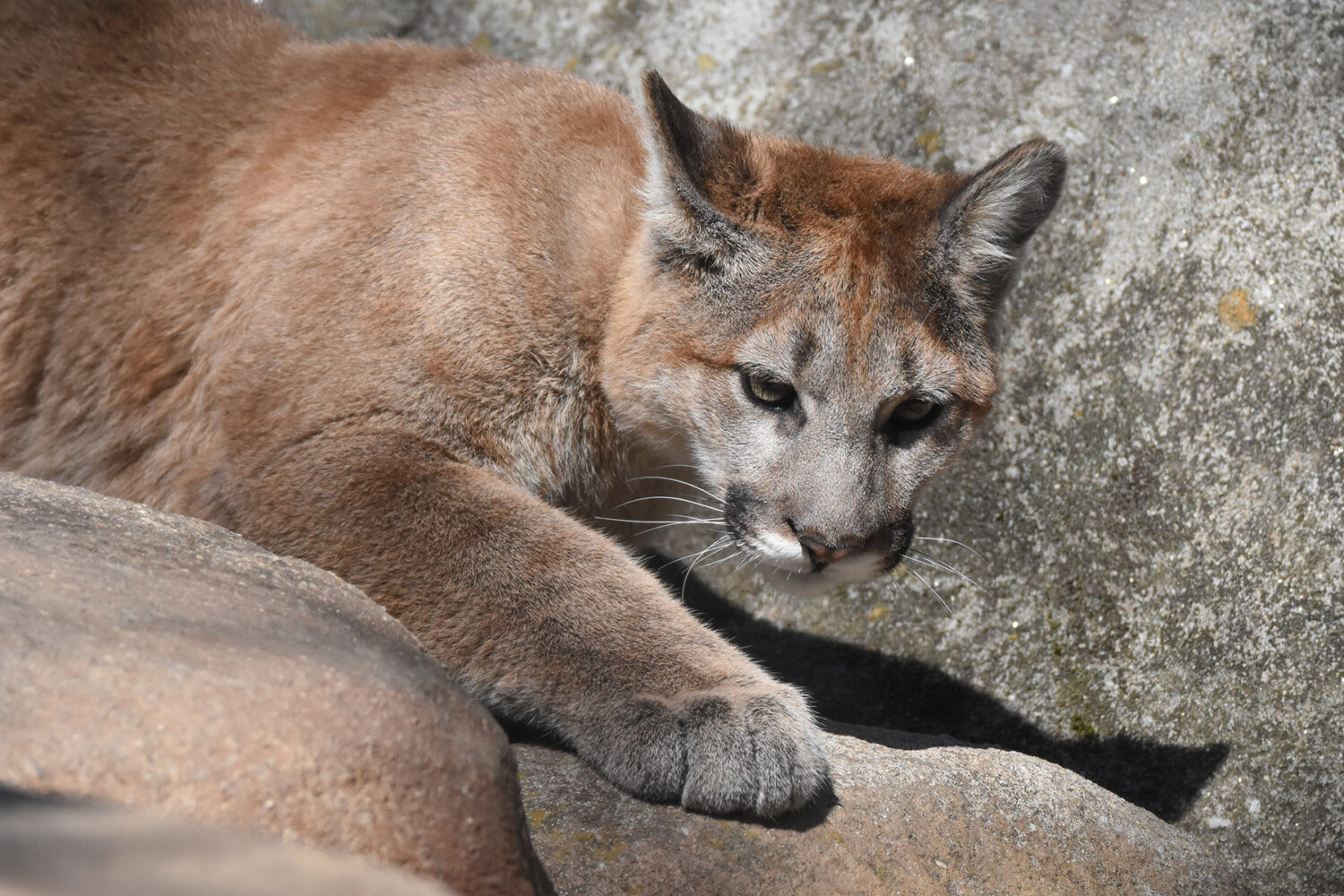
Just in time for area schools’ Spring Breaks, the WNC Nature Center announced that two young cougars are now on habitat! Noa and Hayla, named about the Swannanoa and Nantahala Rivers that run through Western North Carolina, are sibling cubs that were found in White Salmon, Washington. Born in the summer of 2023, they are expected to be around eight months old. In the wild, young cubs stay with their mother for up to two years, learning critical survival and hunting skills.  Because of their age, Noa and Hayla were deemed non-releasable, and the WNC Nature Center was happy to give them a home.


From July 2023 to March 2024, the empty cougar habitat was temporarily used by resident coyotes Cal and Walker. Part of the baby boom that hit the WNC Nature Center last year, Cal and Walker were two of the 19 animals that joined the Center in 2023. The majority of these new animals were babies and had been deemed non-releasable by the rehabilitators who found them. While the coyotes utilized the cougar habitat, the coyote habitat was revitalized thanks to a major donor.
 
“The Friends of the WNC Nature Center are so grateful to the Hoffman family for their support of the coyote habitat renovation, says Executive Director Kate Frost. “Because of their generosity, the Nature Center was able to move its animals around and update and re-vision the coyote habitat and guest experience in that area.”

Shortly after the coyotes transitioned to their new space, Noa and Hayla were able to move into the cougar habitat, which is next to the bobcat habitat. 

You can support the new cougars and all the animals that call the Nature Center home by becoming a membersymbolically adopting them, and purchasing items from the Animal Wishlist for them. If you’re interested in learning more about how your generous donation can allow the Friends of the WNC Nature Center to do even more for the animals, please email Director of Development Cindy Smith at [email protected].

A Fresh Start in New Skin

As we enter the new year, many of us think about starting fresh with a clean slate. There are some animals at the WNC Nature Center that take on this mindset as well, except that it has nothing to do with the date or season. When a reptile or amphibian is ready for a new beginning, they shed their skin.

While snakes are most famous for this process, all animals shed their skin, including us! Humans shed millions of skin cells every day, but they’re too small for us to see. If you’ve ever scratched your arm and noticed a little bit of “dust” that came off under your fingernails, that’s our version of shedding.

But reptiles and amphibians often shed their skin in much larger pieces, which is why it’s so noticeable. This process, known as ecdysis, is a natural part of their life cycle and allows them to continue to grow. It’s also a way to slough off any harmful parasites. One exception to this rule are turtles, who shed their skin more similarly to humans.

Many herptiles (reptiles and amphibians) eat their shed since this outer layer is filled with absorbed nutrients. The shedding process can take anywhere from a few days to a few weeks. Animals often stop eating during this time, so consuming their shed can also be a way to “kick-start” their digestive system.

Shedding can occur from a couple times a year to a couple times a month, depending on where the animal is in their growth cycle. For many herptiles, there isn’t much of a noticeable change in appearance during this process. 

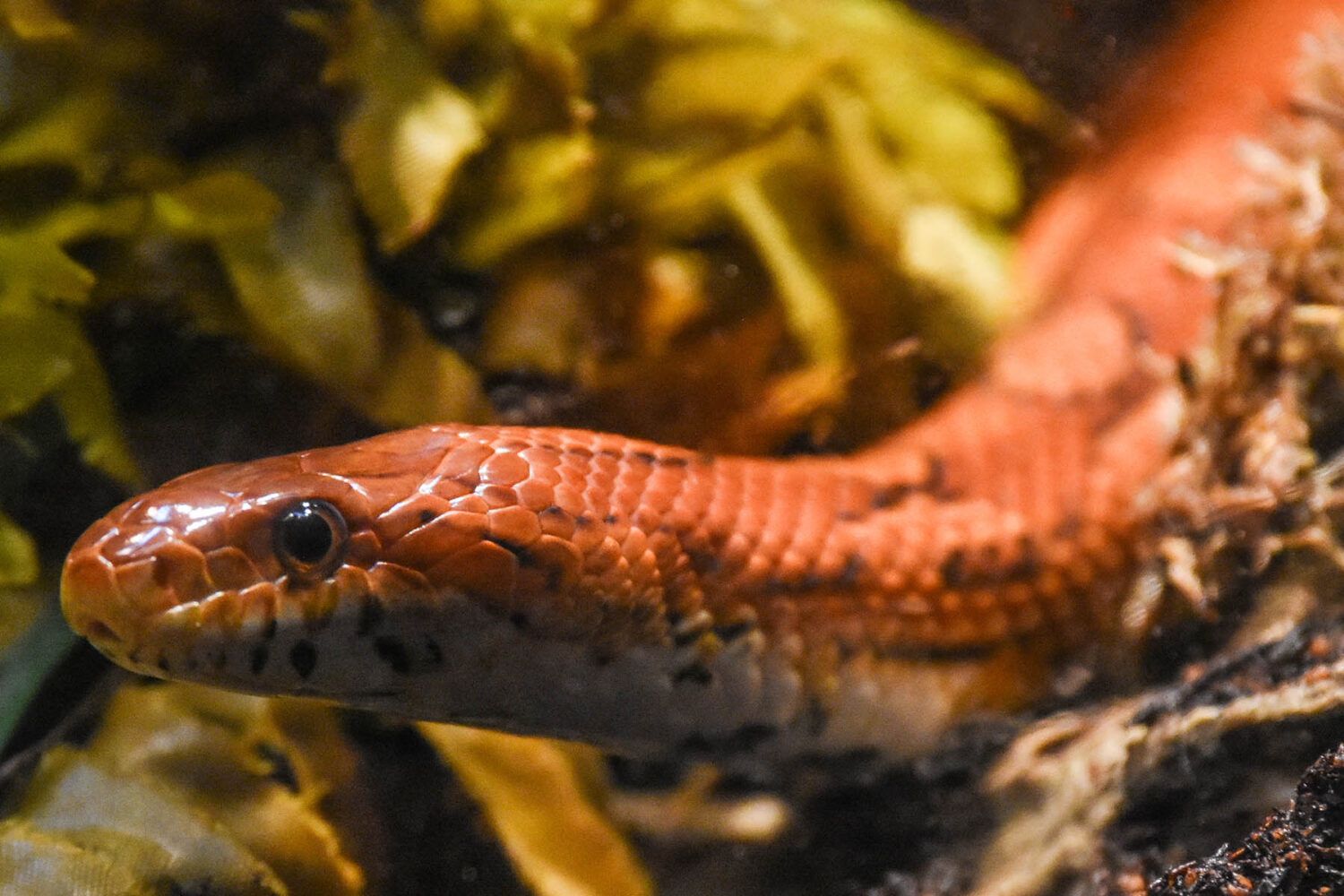
However, when snakes are preparing to shed, they become opaque, meaning that their whole body turns a milky blue color. Even their eyes become opaque since they have scales instead of eyelids. This change in color is due to a build-up of fluid between the old and new skin layers. The snake will then rub its head against surfaces to create a tear in the old skin, starting from the mouth and continuing down its body. The snake then slithers out of its old skin and is ready to move forward with a fresh new layer. The next time you visit the Nature Center, keep an eye out for signs of shedding. This could include a milky-colored snake, an anole with pieces of skin sloughing off, or a floating translucent shed in the hellbender habitat. As we step into the new year, take a leaf out of a herptile’s book: shed the old and welcome the new!