Every year, AZA-accredited zoos and aquariums throw a ‘Party for the Planet’ to encourage people to take action to create healthy habitats for wildlife and humans to thrive together.
The WNC Nature Center will spring into action to celebrate Earth Day, Endangered Species Day, and World Ocean Day this summer with three community events.
Earth Day, April 22, from 10:30 am to 2:30 pm
For Earth Day, Nature Center staff and volunteers will be transforming the Songbird Garden into a Certified Wildlife Garden for native wildlife to thrive. Stop by the docent station at the Songbird Garden (near the otters) where you can learn more about creating your own Certified Wildlife Garden by planting native, bird-friendly plants!
Endangered Species Day, May 20 Endangered Species Day launches the WNC Nature Center’s ongoing partnership with ECO-CELL, an organization that recycles electronic devices to help protect crucial rainforest habitats. Starting May 20 through the end of the year, you can bring your old, broken, or bedazzled electronics to the Ticket Office at the Front Entrance of the WNC Nature Center and donate them to support conservation efforts.
Accepted items for recycling include cell phones, smartphones, iPhones, iPods, iPads, tablets, Apple/Android watches, bluetooth, tablets, GPS, MP3 players, e-readers, digital cameras, handheld gaming systems and the accessories that come with them.
Electronic devices like tablets and cell phones contain an ore called Coltan, which coats the capacitors inside gadgets to make them energy efficient. This ore is found in great quantities in the Congo, home to the critically endangered gorilla and chimpanzee. Due to Coltan mining in the Congo, the eastern lowland gorilla population has declined 90 percent. Recycling your gadgets with ECO-CELL helps save these animals by reducing the demand for Coltan and providing funds to conservation organizations.
The WNC Nature Center will be donating all proceeds to the Red Wolf Coalition to help protect one of the most endangered canines in the world, the American Red Wolf.
World Ocean Day, June 11, 10am-12pm River Clean up, 12:30pm- 2:30pm BioBlitz On World Ocean Day, Nature Center staff and volunteers will be making a splash in the Swannanoa River by hosting a river clean up in the morning with community partner RiverLink. Together, we can help preserve precious species like otters and hellbenders by cleaning up their habitat. The river clean up will take place 10am-12pm. To register for the river clean up, you must by 7+ years old and email [email protected].
The WNC Nature Center will also be hosting a BioBlitz that afternoon by the river for the whole family to enjoy!
Have you ever wondered what creatures live in or around our rivers? Do you want to help scientists learn more about biodiversity and stream health? If so, please put on your scientist cap and join us for a BioBlitz with our partner and National Geographic photographer, Kevin Fitzpatrick! The BioBlitz is open to the community and will be a fun hands-on educational activity for the whole family to enjoy! Join us at the river bank below the Asheville Rec Park pool (at the public picnic shelters).
Questions about any of these events? Email Chrissy at [email protected] for more information!
Celebrate the Great Backyard Bird Count with the WNC Nature Center from February 18 to 21! For the past 25 years, birders have come together from all over the world to watch birds and record what they see and hear in an online database called eBird. These data points help scientists track bird populations, habitat ranges, and changes over time to ultimately help the survival of birds. For more information on how to participate please visit: https://www.birdcount.org/Here’s what you can do!1. Download the eBird app.2. Pick a birding location (this can be your backyard!)3. Watch birds for 15 minutes or more, at least once over the four days.4. Upload your data on eBird. Bonus Step 5. Take a picture of your favorite birding spot or bird and email it to [email protected] for a chance to win two free guest passes in our March photo contest! Photos should be taken during the Great Backyard Bird Count and can be from anywhere. All submissions must be emailed by February 28.
Tis the season for special deliveries! The WNC Nature Center awaited some very precious cargo on Saturday, November 20, when a critically endangered red wolf was flown to the Asheville Regional Airport from New Jersey aboard a 1982 Piper Saratoga.
The aircraft’s pilot was Michael Schneider, Founder and Executive Director of Pilots To The Rescue (PTTR). The nonprofit was created in 2015 to support a network of trained volunteer pilots to transport and rescue animals. “We’re mostly known for our work with cats and dogs,” Schneider explained, “but it’s a real privilege to be able to transfer an endangered species like this red wolf.” The aircraft did not head back north empty; PTTR returned home to New Jersey-based nonprofit Home for Good with dogs from Aiken, South Carolina that were at risk of euthanization.
Rebecca Bose, Curator of the Wolf Conservation Center (WCC) in South Salem, New York, came along for the journey to Asheville to ensure the red wolf’s safe transport to the WNC Nature Center’s care. The WCC works to protect and preserve both the Mexican gray wolf and the American red wolf through education, advocacy, and participation in the federal recovery and release programs for these species.
Red wolf M2235, also known as Ben, was born at the WCC in 2018. For the past three years, he had been living off exhibit with his mother, father, and siblings. “Ben is a favorite at the Wolf Conservation Center,” says Bose, “and we’re excited to be able to fly him down here first class where he will meet his new mate, start a new life, and hopefully have some puppies of his own!”
It took about four hours to fly Ben from New Jersey to North Carolina, making the transfer time only a third of what it would have been driving. Erin Oldread, Animal Curator at the WNC Nature Center, was extremely grateful to the Wolf Conservation Center and Pilots to the Rescue for coordinating this special flight. “In terms of safety and general comfort, flying him to Asheville reduced travel time and undue stress for Ben.”
Oldread and Vet Technician Lori Hyatt arrived at the Asheville Regional Airport in the Friends of the WNC Nature Center’s “Wild Wagon” to take Ben the rest of the way to his new home. “When we got permission to drive onto the tarmac, the employees there thought we were trying to catch a red wolf that was loose in the airfields,” Oldread recalls. “Most people don’t realize just how critically endangered red wolves are or that they can only be found in the wild in one place in the world.”
In October, US Fish and Wildlife estimated that there are only 15 to 17 red wolves living in the wild in Eastern North Carolina. And there are 241 red wolves living under human care in places like the WNC Nature Center. The WNC Nature Center has been involved with the American Red Wolf Recovery Program since 1990, when they began exhibiting red wolves for the first time. Between 1996 and 2014, 13 pups have been born at the Nature Center.
Red wolves Karma and Garnet came to Asheville in fall 2018. For the past two years, they have not successfully reproduced. Because red wolves are so critically endangered, the Association of Zoos and Aquariums’ Species Survival Plan program recommended that a new breeding pair of red wolves be transferred to the WNC Nature Center. This transition will be completed in the coming months. In September, Garnet went to the Endangered Wolf Center in Eureka, Missouri, and Karma will be leaving in spring 2022. After Ben successfully quarantined, he and Karma were placed together for companionship and will remain together until the new female is transferred to the WNC Nature Center.
While there is a long road ahead for the species’ ultimate recovery, Oldread is cautiously optimistic about the Nature Center’s role. “We’re proud to be part of the Species Survival Plan program for red wolves, and we’re hopeful that our new red wolves will be able to reproduce successfully in the future to have offspring that could potentially be released in the wild and help grow the population.”
From Species Survival Plan recommendations to the transportation of the red wolves, collaboration is key in ensuring the future of this species. As Bose shared before flying back to New Jersey, “We’re all here on the same team trying to fight the good fight to get these wolves back on the landscape.”
Community members and supporters of red wolf conservation have a role to play as well. With breeding red wolves at the WNC Nature Center, the community can help support a local effort to save these critically endangered animals. Donations can be made online at www.wildwnc.org/donate or mailed to Friends of the WNC Nature Center, PO Box 19151, Asheville, NC, 28815. Gifts of $100 or more will be matched up to $2,500 by Weiler Woods for Wildlife, a red wolf conservation partner with the Friends of the WNC Center, through the end of the year.
The WNC Nature Center is excited to announce that they have been accredited by the Association of Zoos and Aquariums (AZA). Fewer than 10% of all zoos and aquariums in the world meet the standards to earn accreditation from the AZA. The WNC Nature Center has been accredited since 1999.
To earn AZA accreditation, zoos must meet rigorous standards in animal care, veterinary programs, conservation, education, safety and other areas. In addition to a very lengthy written application, the AZA also requires an intense multiple-day on-site inspection and an in-person hearing in front of the Accreditation Commission. AZA member institutions are required to repeat the entire accreditation process every five years to assure that they are upholding the continuously evolving standards, incorporating best modern zoological practices in animal welfare and management, and embracing modern AZA philosophies.
“The standards for accreditation are higher than they have ever been. We are proud that we continue to improve each and every year to meet these demands,” said WNC Nature Center Director Chris Gentile.
In addition to earning this coveted accreditation, the WNC Nature Center’s Young Naturalist program was also selected to receive a Significant Achievement Education Award from the Association of Zoos and Aquariums.
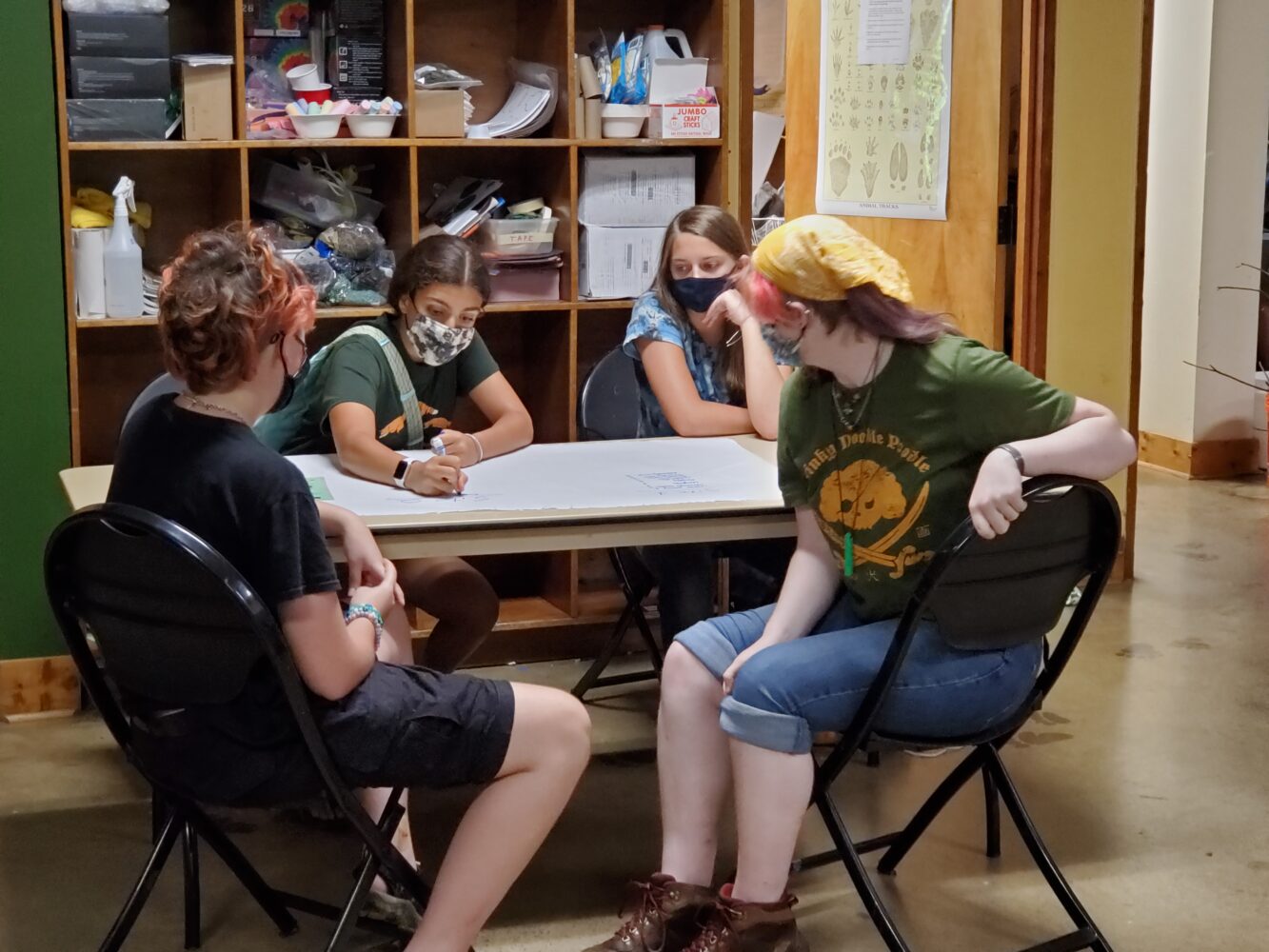
The Young Naturalist teen (ages 13-17) volunteer program creates opportunities for staff and teens to build meaningful relationships with each other and with nature over several months in an experiential learning program in which teens from around the Southern Appalachian region volunteer as stewards and interpreters of their mountain home. The Young Naturalist program challenges the trend of indoor childhood by engaging teens in nature-based programming which ripples out into the community.
The program annually attracts and accepts more than 80 teens and young adults who are interested in nature and the environment, a number of which identify as LGBTQ+, as neurodivergent, as coming from low-income households in rural and urban areas, and as youth of color. The program has a powerful way of strengthening the community, developing leaders, and fostering a sense of stewardship for our mountain home.
Starting in 2020, the Young Naturalist program went virtual amid the pandemic to continue serving teens while following public health guidelines. Although this was the first time running the program in a distance learning format, Teen Program Coordinator Alayna Schmidt actively engaged teens in expanded learning opportunities that staff and teens co-developed in response to the disruption. By participating in online meetings for socializing and interactive lessons, interviewing guest speakers, collecting data for citizen science projects, exploring environmental justice maps, and other special projects, teens continued to be enriched and earn service hours while sheltering at home under public health guidelines. The distance engagement that program staff and teen participants co-created will continue to support program goals and objectives as in-person opportunities return following the pandemic.
Schmidt has won multiple grants to elevate the Young Naturalist program, including a recent $10,000 grant from the Children & Nature Network to strengthen the program while participating in a nationwide cohort exploring strategies for youth development and nature-based programming. “The Young Naturalist program has been an incredible asset to our community for over 40 years. It has gone through significant changes over the years, with the most significant changes coming from the pandemic,” said Schmidt. “The creativity of our teens helped adapt the program to the times and has made it stronger and more accessible than ever.”
Congratulations to the staff whose dedication to the animals, education programs, and conservation initiatives at the WNC Nature Center has earned them such high commendations!
Selling lemonade to flowers, kids across the mountains of Western North Carolina are showing up in a big way for the animals at the WNC Nature Center.
In September, the Friends of the WNC Nature Center announced they were raising money to support repairs to Brandon’s Otter Falls, the habitat of river otters Obi-Wan and Olive. “The response was tremendous,” Development Director Kate Frost says, “and we received some really special notes with the donations that came in. Two-dollar bills from the Tooth Fairy, allowances that had been matched by parents, and colorful pictures were given by kids to support the otters.” The fundraising goal was met, and repairs should begin on the otter habitat this fall. Obi and Olive will soon be able to enjoy their newly fixed pool!
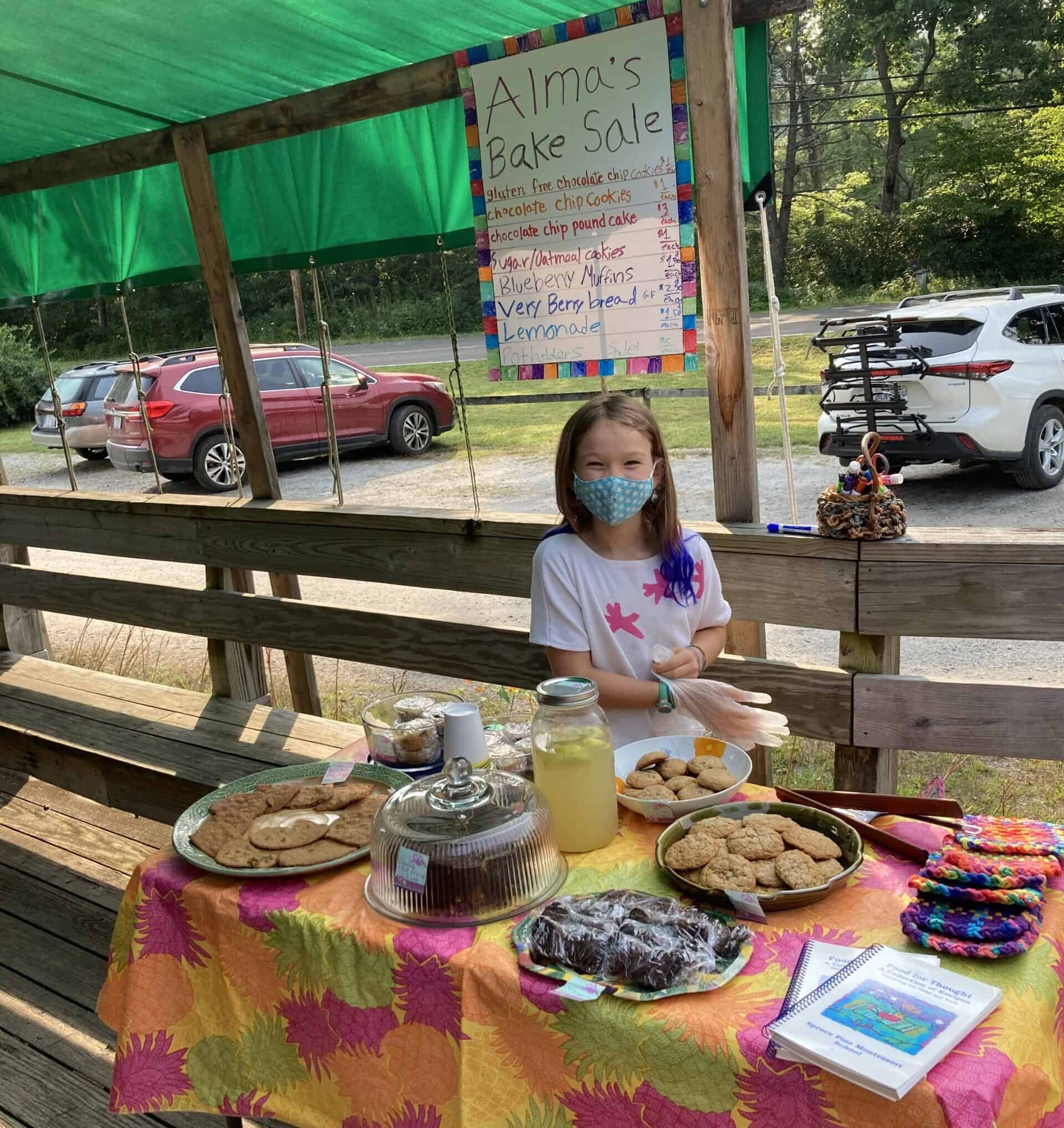
Several more kids donated their earnings from summer enterprises, including lemonade stands, flower stands, and bake sales. Alma Rouse is an 8-year-old who lives in Yancey County with her mom, dad, and older brother. Over the past year, she has raised more than $500 to support the WNC Nature Center through bake sales and craft sales. “I love animals, and I would do anything for them,” Alma says. “The Nature Center is one of my favorite places. I like the variety of animals from bears to owls. It is cool to see how animals live in their natural habitat.”
Bored at home during the lockdown, Alma got the idea to raise money to help animals: “I got to thinking about how much animals mean to me when I was home so much, spending time with my cat Fuzz. I wanted to support them, and I love baking and making crafts, so I thought if I sold them, I could help animals in need.”
Alma now periodically sets up at their local food co-op to sell cookies and crafts, and she’s established an online store at www.almashandmade.com, where customers can support her fundraising efforts by purchasing cookies, potholders, and window stars in a variety of colors.
“It’s inspiring to see the giving spirit of Alma and these other young entrepreneurs,” says Frost. “We’re so grateful for the engaged families in this community who are helping grow the next generation of nature lovers, conservationists, and even fundraisers!”
Through her donations, Alma has adopted the Nature Center’s skunk, cougar, gray wolves, red foxes, river otters, and white-tailed deer. You too can become a Wild Parent and support the mission of the WNC Nature Center by adopting an animal at www.wildwnc.org/adopt
August 12 is International Youth Day, which is the perfect time to highlight one of our most popular summer teen volunteer programs at the WNC Nature Center! Alayna Schmidt, Teen Programs and Ed-ternship Coordinator, shared more about what her Young Naturalists did this summer:
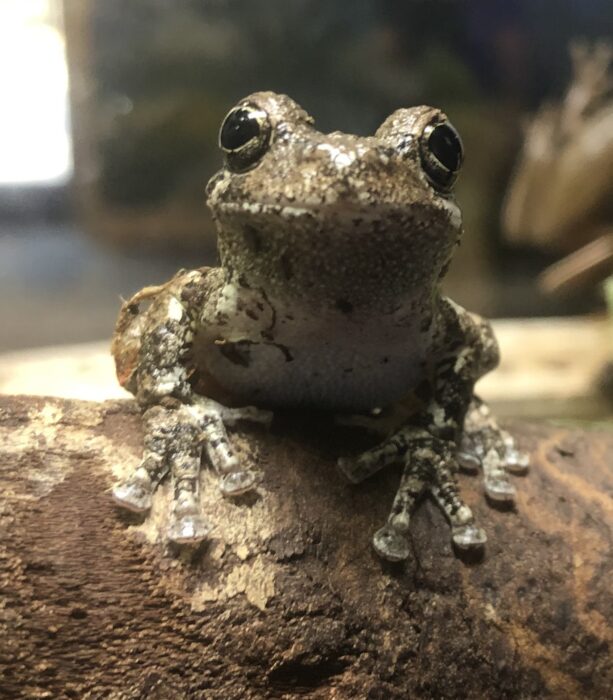
Frogs seem to embody the spirit of change and transformation evident in the Young Naturalists program. Just like frogs go through significant metamorphosis during their lifecycle, the Young Naturalists program has also undergone significant transformations during this pandemic. We are so excited for these developments!
The Young Naturalist program has run for over 40 years, providing opportunities for teens in the Southern Appalachian Mountain region to give back to our beautiful mountain home. Many teens are local to Asheville and some travel from the borders of our neighboring states, South Carolina and Tennessee, to be a part of this impactful program. The Young Naturalist program is a nature-based youth development program emerging from a philosophy that humans are a part of nature and have a responsibility to care for nature’s communities – both the human communities we are a part of and the environmental systems we are nestled within.
Frogs have skin that is sensitive to changes in the environment. As our environment changed over the past two summers, we have been sensitive to a need to transform the way we run our program. Historically, Young Naturalists would volunteer on the grounds over the summer and help WNC Nature Center guests connect with native wildlife through interpretive wayside exhibits. The pandemic challenged us to rethink the way we run our programming, bringing us into virtual engagement and hybrid programming which opened opportunities for deeper learning in addition to service work. The ongoing desire for racial and environmental justice in our country and local community also challenged us to consider what and who is included in our program.
Frogs make calls to find and communicate with each other around the pond they call home. Similarly, the Young Naturalists called out into our local community to find others they could learn from about the topics they were interested in. And we got calls back in response! Young Naturalists expressed a desire to learn more about local issues and how they could help. This summer, Young Naturalists explored different weekly topics that developed their environmental literacy, including learning about climate action and environmental justice in our own Asheville communities. Amber Weaver from Asheville’s Office of Sustainability spoke to the teens about the City’s Climate Justice initiative. We learned from DeWayne Barton about the Burton Street Community, a local environmental justice community, on a tour with Hood Huggers International. We learned from a whole series of Black, Indigenous, and other people of color guest speakers who presented on a wide variety of topics related to nature, science, and conservation.
This summer has been unlike any other in the Young Naturalist program. While we hope to have Young Nats back on the grounds helping guests make these important human-nature connections in future years, we also embrace the positive changes that have emerged from the past two summers. The challenges we’ve encountered have pushed us to adapt and grow to better meet the needs of the teens in our program, the communities we live in, and the environment that surrounds and sustains us. The Young Naturalist program now fosters stronger connections to our local community than ever before. But don’t take my word for it…check out what Young Nats did this summer in this awesome video!
https://youtu.be/rnXWCNQZgUc
If you’re between the ages of 13-17 years old, we hope to see you in our teen programs! And if you’ve already passed the age limit, you can apply to Education Internships that help lead this program. And speaking of program leaders, our 2021 Ed-terns, Felicite, Marijke, and Oliver, were amazing leaders who made this summer’s program so impactful! Together, we can do so much more!
April is the time of year when spring begins to reveal itself. Many of the animals at the WNC Nature Center have birthdays this month, including our gray wolves, coyotes, and red and gray foxes! We usually start to see baby animals and we are more likely to see wildlife in general as they emerge from their winter homes in search of food. This means baby birds are learning to fly, squirrels may fall from their nests, and animals are more likely to cross the road.
It’s good to know when you should (or shouldn’t) help wildlife. For instance, it is against North Carolina law to hold wildlife for more than 24 hours without a state license. Licensed rehabilitators have the skills and knowledge to give the animal the best treatment and return it to the wild.
So what do you do when you find an animal?
If you find a baby bird:
If the bird is obviously injured, sick or brought to you by your cat, contact a local wildlife rehabilitator. If the baby is without feathers, place the baby back in the nest. It is a myth that birds will reject their baby if a human has handled it. Just be sure not to over handle a baby animal, as stress can kill young critters. If you cannot find the nest, you can create a makeshift nest, place it in a nearby tree and observe the baby from a distance. If the parents do not visit the nest sometime soon, contact a wildlife rehabilitator. If the bird has feathers, it is most likely learning how to fly and can be left alone, unless it is in immediate danger (cats or dogs nearby). If this is the case, place the baby in some nearby bushes or nest and wait for parents to visit. If you don’t see any parents nearby, you know what to do.
If you find a baby mammal:
If the animal is orphaned, injured, or sick, contact a wildlife rehabilitator. Sometimes we see a baby mammal by themselves and we think they need help. This is not always the case and this mistake can lead to an accidental kidnapping! Baby rabbits and fawns (baby deer) are often left alone while the mother searches for food. If you find a baby deer with spots hunkered down in the grass by themselves, the rule of thumb is to wait for 24 hours to see if mom comes back. If you are certain a baby deer or baby black bear are orphaned or injured, you can contact the NC Wildlife Helpline at 866-318-2401 (Mon-Fri. 8 am-5 pm) or the Wildlife Enforcement Division at 800-662-7137 outside of business hours.
If you find a reptile:
If the reptile is obviously injured or sick, contact a wildlife rehabilitator. If you find a baby reptile, leave it be or move it to a safe, nearby location if necessary. Baby reptiles have natural instincts to take care of themselves the moment they are born. It is fairly common to find turtles crossing the road. If the animal is not injured and it is safe to do so, pick the turtle up and take it to the side of the road in the direction it was heading. If you turn it around, it will simply walk back into the road to go the direction it was originally. Snakes crossing the road can be nudged along gently with a long stick.
There are many resources available if you have any questions on what to do if you encounter injured wildlife. While the WNC Nature Center is no longer a triage facility for injured wildlife, Appalachian Wildlife Refuge located in Candler has stepped up to fill this void. If you find injured or orphaned wildlife, you can email them at [email protected] or call 828-633-6364. The full list of local and licensed wildlife rehabilitators can be found at www.ncwildlife.org/Injured-Wildlife.
Together, we can all make sure that the amazing animals who call Western North Carolina home are healthy and can remain in the wild this spring!
This spring, area runners will have a brand-new opportunity to run wild at the WNC Nature Center. The Friends of the WNC Nature Center will host its first-ever race with the inaugural Running of the Goats 5k and Nature Walk on Sunday, April 25. The event will take place in and around the WNC Nature Center with several options for runners and walkers. Learn more and register at www.wildwnc.org/runwild.
Participants can run or walk the 3.1 mile course, which starts and ends at the WNC Nature Center. During this chip-time race, runners will begin by catching a glimpse of the goats, bears, birds, and otters before heading out on a rolling, paved course on Azalea Road by the John B. Lewis Soccer Fields.
There is also an option to choose a non-competitive Nature Walk inside the Nature Center. The walk will wind its way along a one-mile paved route to see the animals while enjoying the park at a more leisurely pace. This self-guided tour will include fun, nature-related prompts and activities along the path. To ensure that the animals do not become stressed, running is not permitted along the Nature Walk course.
Proceeds from the event go to the Friends of the WNC Nature Center and help support various programs throughout the park, including animal enrichment, outreach education, and habitat renovations. For those who want to support the Friends of the WNC Nature Center but aren’t ready to participate in an in-person event, there’s also a virtual race option available.
“The Running of the Goats 5k and Nature Walk takes place the weekend after Earth Day, so it’s the perfect time to get out in nature and celebrate this amazing place that we get to call home,” says Kate Frost, Director of Development at Friends of the WNC Nature Center. “We expect this to become an annual event, as it’s a great opportunity to get outdoors, help save wildlife, and explore what the WNC Nature Center has to offer.”
Registration opened on Tuesday, March 16 and capacity is limited. The first 75 participants to register for the in-person event will receive an additional $20 in extra goodies in their race packets, including coupons to Highland Brewing, The Hop Ice Cream, Black Bear BBQ, and KONA Ice. Register by April 11 at www.wildwnc.org/runwild to receive a free race shirt and guest pass to the WNC Nature Center.
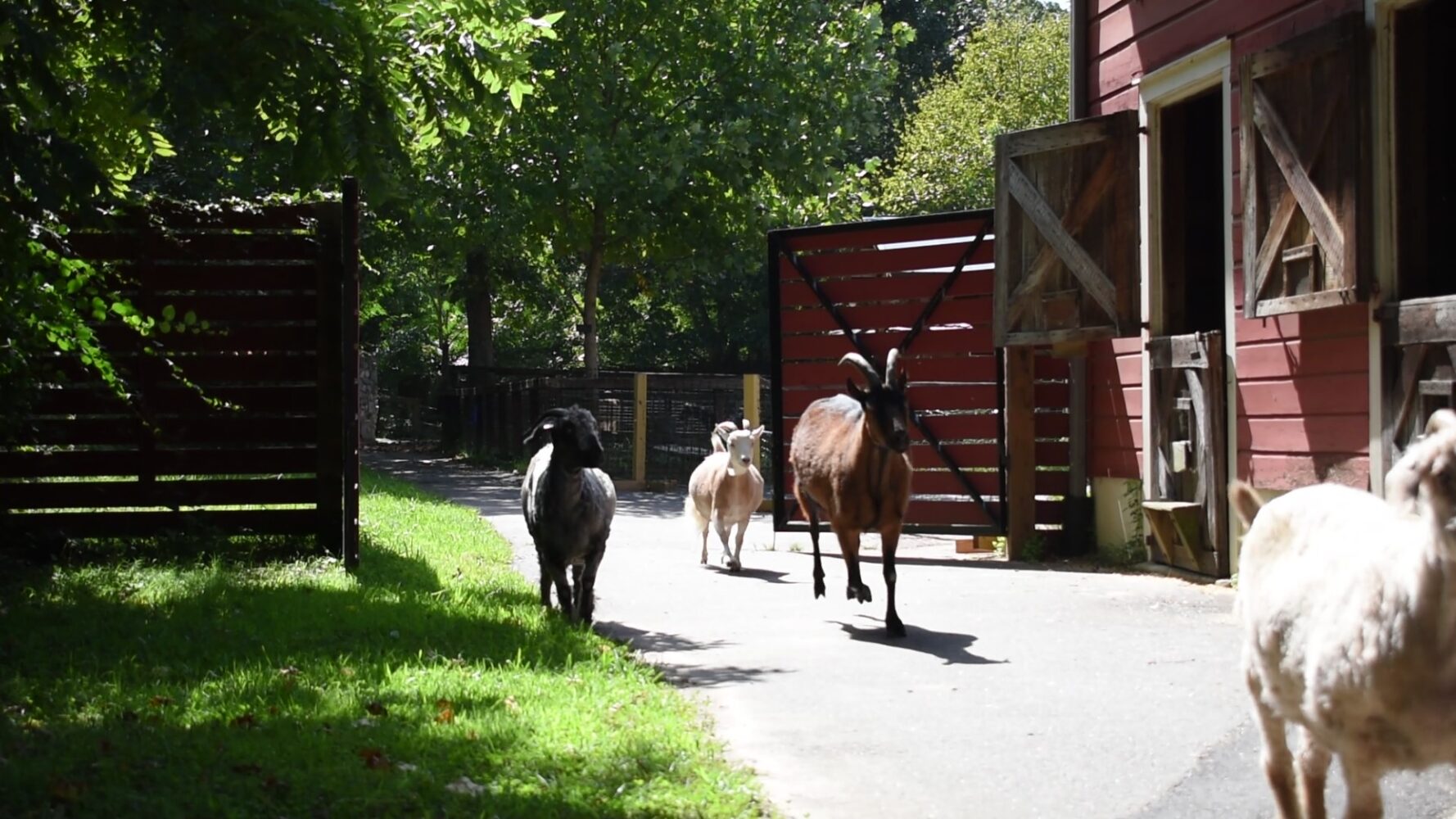
The event was named “The Running of the Goats” because of the afternoon tradition at the WNC Nature Center where the farm animals leave the barnyard and run toward their stalls for their dinner. While the goats will not actually be running in the race, they will be on the sidelines to cheer on runners, as the first part of the course passes by the barnyard. Plus, participants are encouraged to wear animal-themed attire and accessories for the event, with a costume contest and prizes for the best dressed. There may be a few goats running the race after all!
The Friends of the WNC Nature Center have partnered with iDaph Events to ensure a safe and enjoyable race experience for participants. “Here at iDaph Events, safety is our top priority,” says owner and race director Daphne Kirkwood. “We want to ensure that our participants, staff, volunteers and community stay safe and healthy, and we are following all of the necessary precautions to help prevent the spread of COVID-19. In order to keep our community and runners safe throughout the race experience, we will implement pre-race temperature and COVID screenings, wave rolling starts, and social distance measures will be in place throughout the event. We will aim to have a ‘contactless’ event to provide a safe event for all,” says Kirkwood.
In addition to these safety measures and in accordance with current guidelines for the park from the State of North Carolina, all participants over the age of five will be required to wear a face covering while inside the Nature Center gates and at the start and finish lines of the event. There will be no post-race party this year, and race awards will be announced online. 5k race medals and other prizes will be presented at a later date to the top finishers in multiple age categories. To reduce crowding during the race, spectators will not be allowed in the grounds of the WNC Nature Center or along the course. All attendees must be registered participants.
The Running of the Goats 5k and Nature Walk is sponsored by several community partners, including Zealandia Holding Company, White Oak Financial Management, Park National Bank, BrickStreet Equity Management, Landmark Landscapes, Grimes Teich Anderson LLP, Highland Brewing, HomeTrust Bank, US Cellular Premier Locations, Parsec Financial, and David Rodgers of Appalachian Realty Associates. The Friends of the WNC Nature Center also appreciate the support of iDaph Events, Big Frog, and Earth Fare.
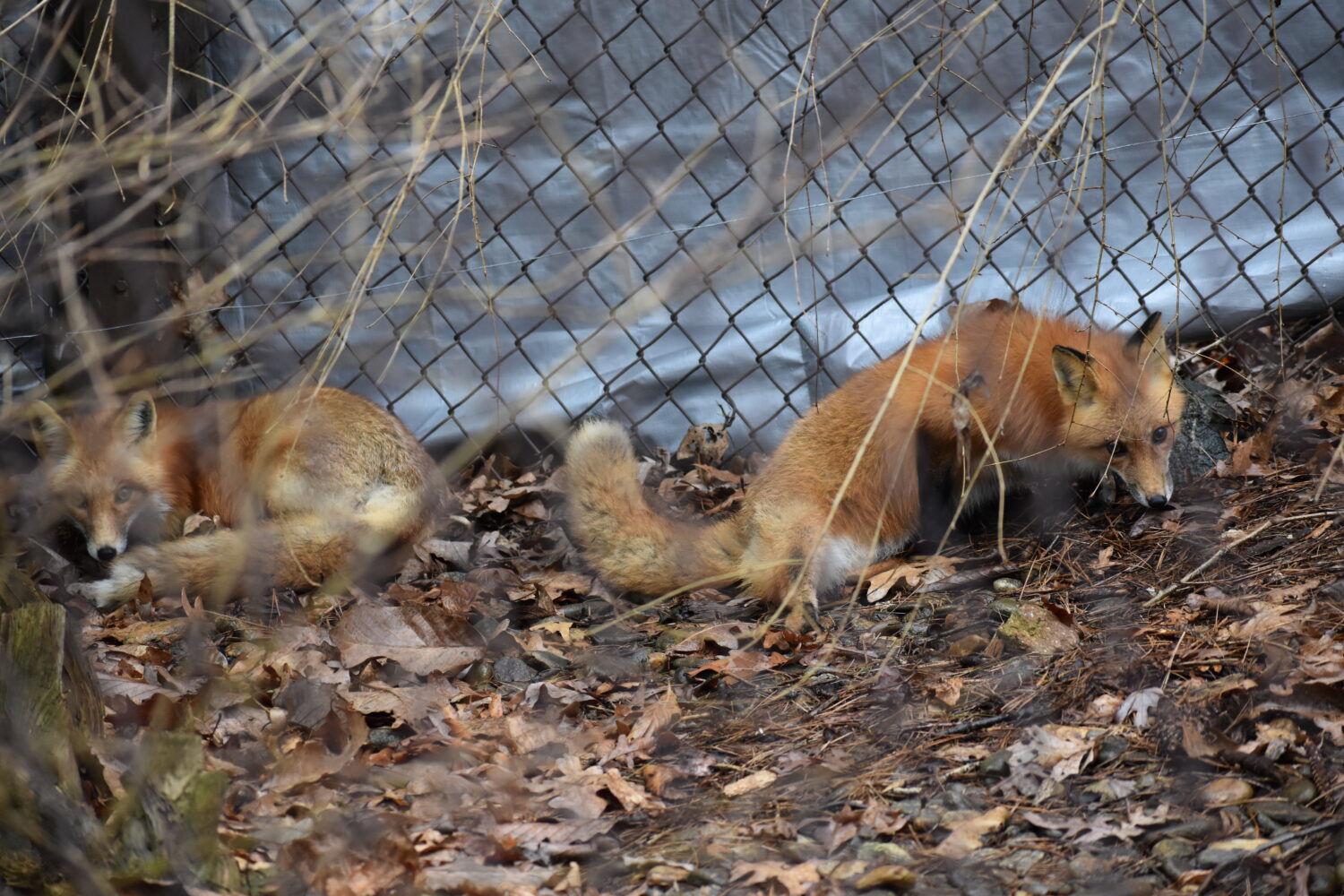
February 11 was a dreary, drizzly day for most, but at the WNC Nature Center, high spirits couldn’t be dampened. New red foxes Samson and Bonita were able to enter their new forever home at the WNC Nature Center.
Samson and Bonita were rescued as kits with poorly healed leg injuries in March and April 2020, shortly after they were born. It was suspected that they had been caught in leg-hold traps, and both had to have a leg amputated to help with pain management and future arthritis issues. While they aren’t siblings, Samson and Bonita have formed a connection with each other, and the WNC Nature Center was able to provide a home for them both.
“The Nature Center has long provided excellent care for animals that, for one reason or another, could not live in the wild,” said WNC Nature Center Director Chris Gentile. “We are so excited to be able to welcome red foxes back to our Center.”
While these red foxes have distinct faces, the easiest way to tell them apart is their missing leg. Samson is missing his front leg, and Bonita is missing her back leg. These young foxes will turn one year old this spring. They may be shy at first, so take time to look through their habitat to find them.
Come see Samson and Bonita in their new home! You can symbolically adopt these red foxes and support their enrichment and habitat improvements by visiting dev.wildwnc.org/adopt. The Nature Center Gift Shop is also working on getting special three-legged red fox ornaments and magnets to celebrate these two!
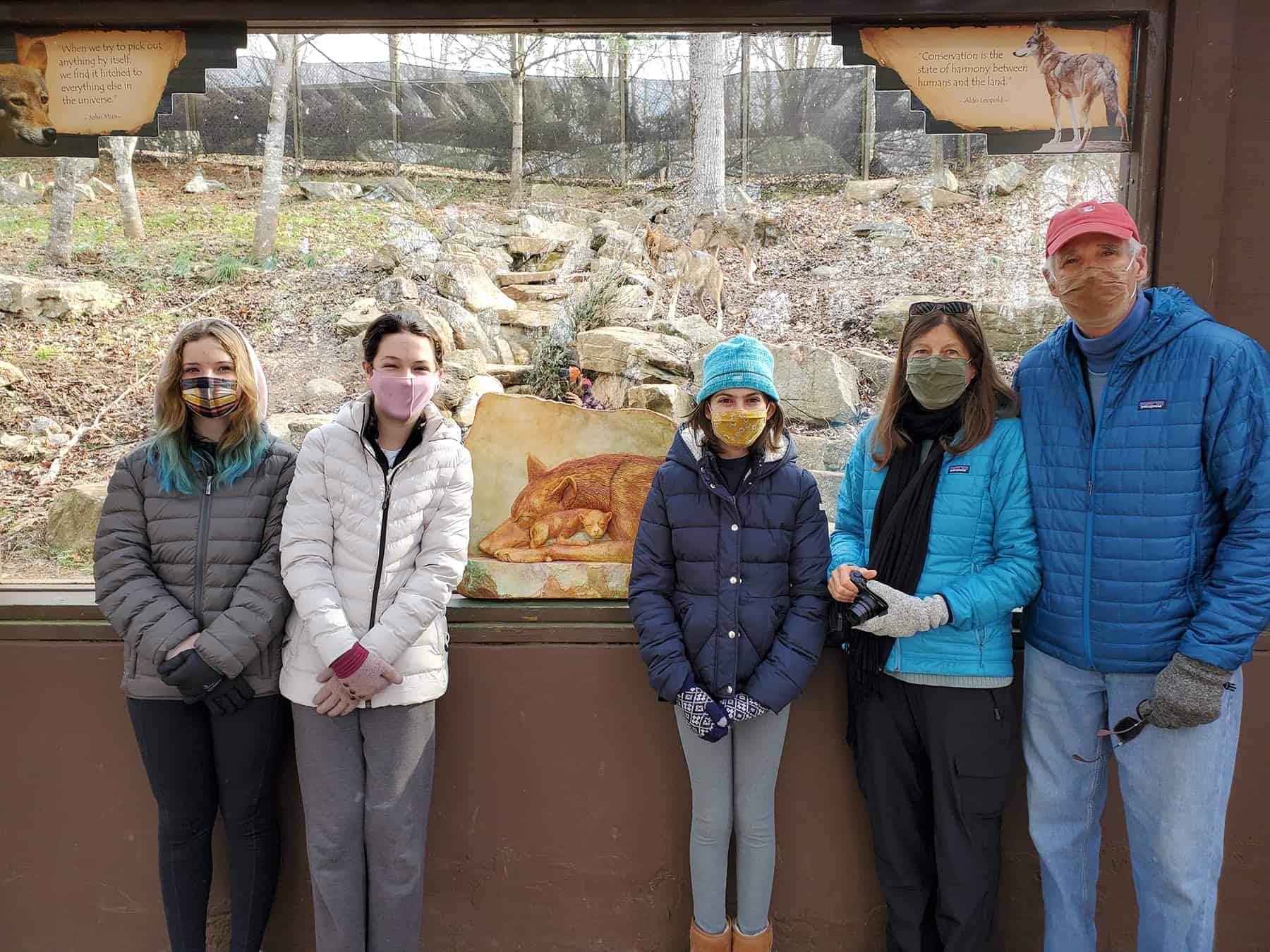
When the Cadettes of Girl Scout Troop 1819 were earning their Outdoor Art Badge, they had no idea they would be inspired to begin a journey to help save the critically endangered American red wolf.
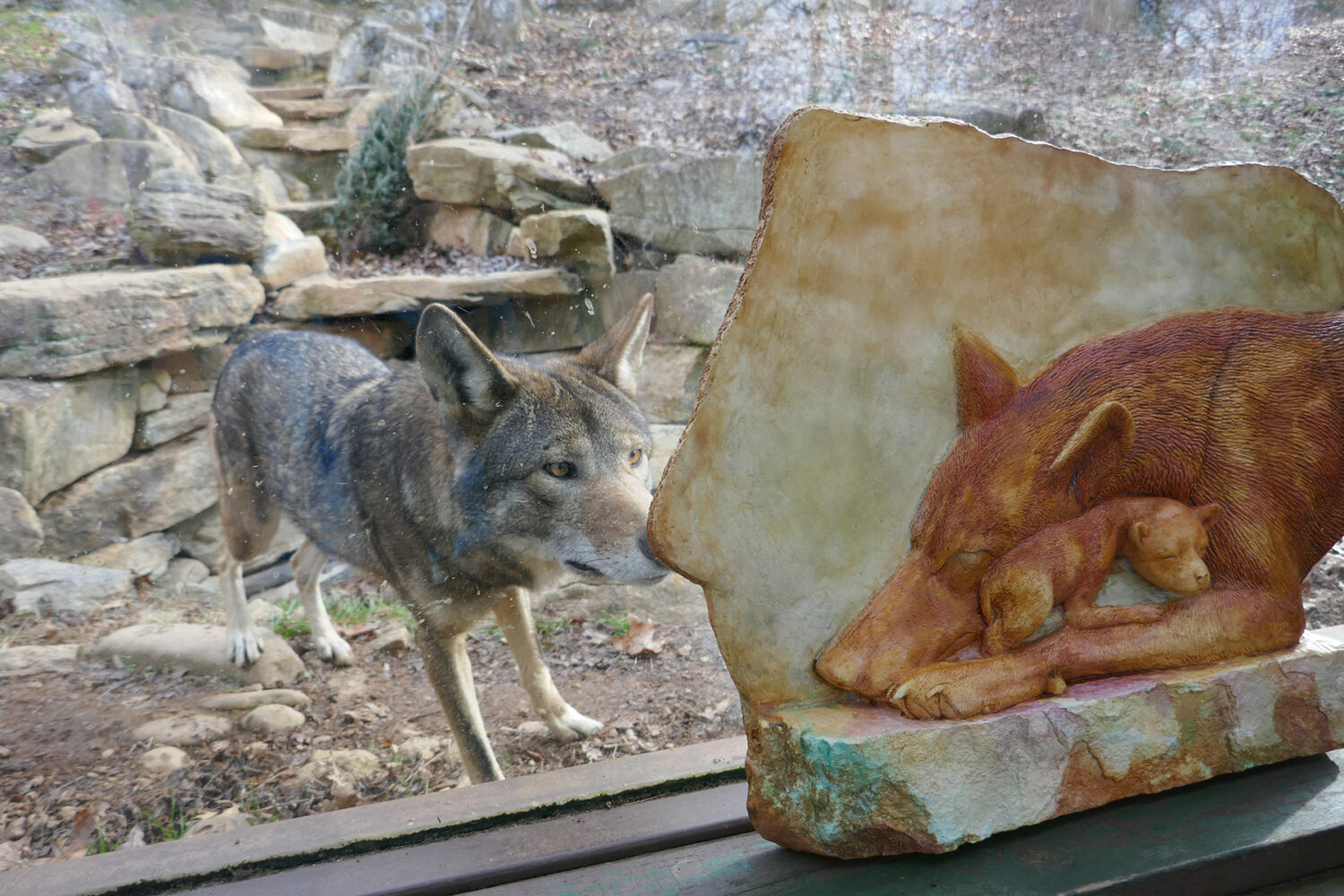
In summer 2018, the Cadettes visited Dale Weiler and Loti Woods, of Weiler Woods for Wildlife, to learn more about what a wildlife artist does and view Dale’s newest endeavor carved out of alabaster. The sculpture, named “Just Settling In,” portrayed an American red wolf and her newborn pup. The middle schoolers were, in a word, mesmerized. They could not believe there were less than 20 wild red wolves living on the planet, and that those lived in their home state of North Carolina.
Inspired to learn and do more, the Cadettes decided to help the red wolves through their annual fundraising project. They also decided to make saving the American red wolf the focus of their Silver Award project.
Troop leader Lori Nichols has been impressed with the girls’ commitment to these animals: “Dale and Loti have instilled in them a sense of urgency to save the red wolf. Scouts are encouraged to remember the Outdoor Code, which states that we are to be conservation minded. The Silver Award is available to middle school girls that are Girl Scout Cadettes and is designed to empower them on through discovery, leadership, cooperation, organization, and accountability. Even though these Cadettes are in the early stages of working toward their Silver Award, I’m convinced that they have already shifted their focus from just earning an award to sincerely helping the red wolves survive.”
Using Art to Raise Awareness
For Dale and Loti, the girls’ reaction was exactly why Weiler Woods for Wildlife exists. Even after 30 years of sculpting wildlife, Dale is still captivated by the medium: “It never ceases to amaze me the power that art possesses. It can literally touch your soul. Watching the Girl Scouts connect with my red wolf sculpture was what every artist hopes to attain in his/her efforts.”
Dale and Loti have long been advocates for the underdogs, using sculptures crafted by Dale to raise awareness of and share their passion for misunderstood and endangered animals like the American red wolf. The wild American red wolf population is critically endangered with as few as 20 red wolves left in the wild in a tiny corner of eastern North Carolina. It became a labor of love for Dale and Loti to raise awareness about the crucial and immediate need to save red wolves from extinction.
To share their message with as many people as possible, more than 30 limited-edition castings of the original “Just Settling In” sculpture were made and donated by Weiler Woods for Wildlife to be put on display across the United States in accredited centers committed to red wolf conservation. Weiler Woods for Wildlife partnered with Defenders of Wildlife to provide one of the castings to be installed in 2021 at the WNC Nature Center, located in Asheville, North Carolina.
Where Art Meets Reality
Zoos accredited through the Association of Zoos and Aquariums, like the WNC Nature Center, play an important role in saving animals from extinction. As part of its Species Survival Plan (SSP) program, the WNC Nature Center has had 13 red wolf pups born into their care. Their current red wolves, Karma and Garnet, are four years old and were matched as a breeding pair by the program.
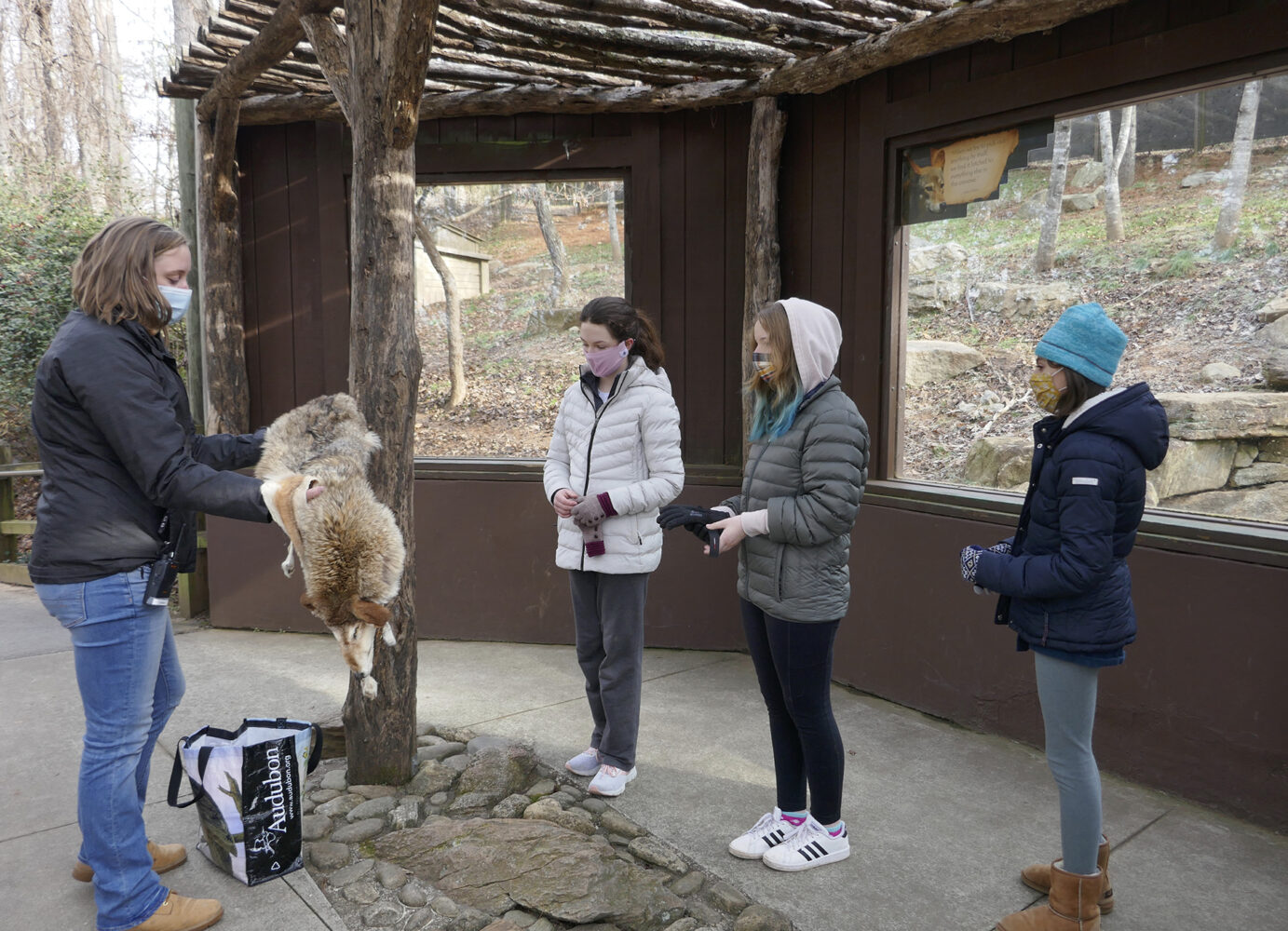
While the seed to help the red wolves was planted in 2018, due to the pandemic, it was not until late 2020 that the Cadettes were able to see the muse for Dale’s sculpture first-hand at the WNC Nature Center. With some special coordination between the Friends of the WNC Nature Center and Weiler Woods for Wildlife, the troop was able to visit the Nature Center in mid-December for a special outdoor program that included a tour of the red wolf habitat and watching the red wolves interact with enrichment.
Community Outreach Coordinator Candace Poolton gave the Cadettes a guided tour and shared more about the red wolves with the girls: “I loved Annie, Ellie, and Bella’s enthusiasm for the red wolf. They all said they really had no idea that red wolves existed until seeing Dale’s artwork, and they asked incredible questions for their age group. We talked about the history of the red wolf, the Species Survival Plan and success stories, as well as why red wolves began to decline again.”
Seeing the animals in person solidified the girls’ commitment to a bright future for the red wolf. “Getting to see the red wolves was something I will never forget,” said Scout Ellie. “I had never been so close to them! I had a big appreciation for red wolves when I saw pictures of them, but after being able to see them up close, it grew even bigger! I really appreciate all the hard work that all that the staff do at the WNC Nature Center to help save these amazing animals, and I hope that one day red wolves will be safe again!”
When the Girl Scouts asked what they could do to make a direct impact on saving the red wolf from extinction, Candace told them that the best way was to get the word out about the plight of the American red wolf and support facilities like the WNC Nature Center that are actively involved in conserving the species.
Future Collaboration
The Cadettes of Girl Scout Troop 1819 are excited to work toward their Silver Award in 2021 by assisting in the education and awareness of the American red wolf. “We want to convey that sense of urgency that Dale, Loti, and the WNC Nature Center gave us,” said Lori Nichols.
Eighteen months ago, Dale and Loti never would have imagined they would be collaborating with the Girl Scouts to bring awareness to the plight of the red wolf. But the strength of the wolf is in the pack, and by combining forces through the breeding program at the WNC Nature Center, the red wolf sculpture of Weiler Woods for Wildlife, and the Girl Scouts’ Silver Award, the conservation plan to save the American red wolf is stronger than ever.
“We were so glad we could be a part of this story,” said Friends of the WNC Nature Center Development Director Kate Frost. “People can’t care about something they don’t know about. By connecting these Cadettes with our red wolves, we’re helping grow the next generation of nature lovers and conservationists who are inspired to protect these amazing creatures.”
“Watching the power of art inspire a group of Girl Scouts was life changing for Dale and me,” said Loti Woods. “To have these girls fall in love with our American red wolf and want to help save it, just by looking at a sculpture, shows how impactful art can be in conservation. I believe this will be an experience which will set the girls on a path toward wildlife conservation.”
With two breeding red wolves right at the WNC Nature Center, the community can help a local effort to save these critically endangered animals who are on the brink of extinction. Donations can be made online at www.wildwnc.org/donate or mailed to Friends of the WNC Nature Center, PO Box 19151, Asheville, NC, 28815. To learn more about the plight of the American red wolf and Weiler Woods for Wildlife, visit www.weilerwoodsforwildlife.com/red-wolf-facts/.